

Education
Network encryption: what it protects and where a VPN fits
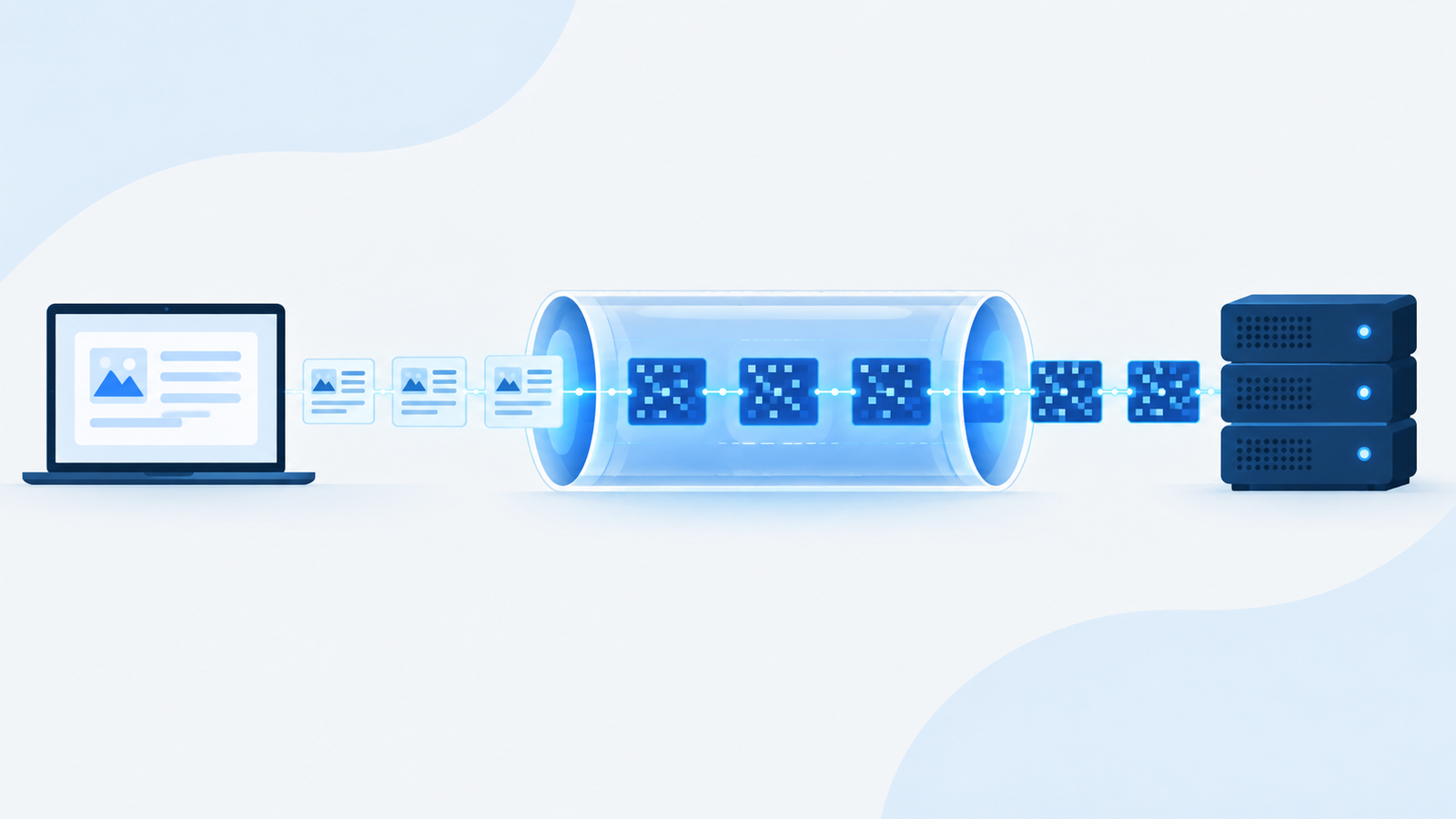
Abstract flow from readable data to protected ciphertext
Illustrative diagram created for VPNVertex
Diagram, not a VPNVertex hands-on test.
Network encryption turns readable data into ciphertext. What it protects, where a VPN fits, and what it does not prove about the endpoint or account.
Network encryption turns readable data into ciphertext before it crosses a network that other people may be able to observe. The point is not to make a connection invisible. The point is to make the captured data difficult to read and to give the receiving side a way to reject altered or unauthenticated traffic.
NIST describes confidentiality as preventing unauthorized disclosure. Its cryptography guidance also treats confidentiality, integrity, authentication and source authentication as separate security services. A VPN can support those services, but it does not provide every security control a device or account needs.
What network encryption protects
Suppose a device sends a request across a local network, an ISP, a VPN gateway and then the public internet. Without encryption at a layer, someone who can observe that layer may be able to read the content or infer useful details from it.
Encryption changes the content into ciphertext. The intended endpoint uses the right key and protocol state to recover the content. A well-designed system also authenticates the peer or the message, so an attacker cannot simply replace a packet and have the receiver accept it as genuine.
Those are different questions:
| Property | Question it answers | What it does not prove |
|---|---|---|
| Confidentiality | Can an observer read the protected content? | That the endpoint is trustworthy |
| Integrity | Can the receiver detect an altered message? | That the user chose a safe destination |
| Authentication | Is the peer or message associated with the expected key or identity? | That the account itself is secure |
NIST's references on confidentiality and cryptographic mechanisms explain why the algorithm, mode and key handling matter. A label such as "encrypted" is not enough to describe the whole design.
Where a VPN adds encryption
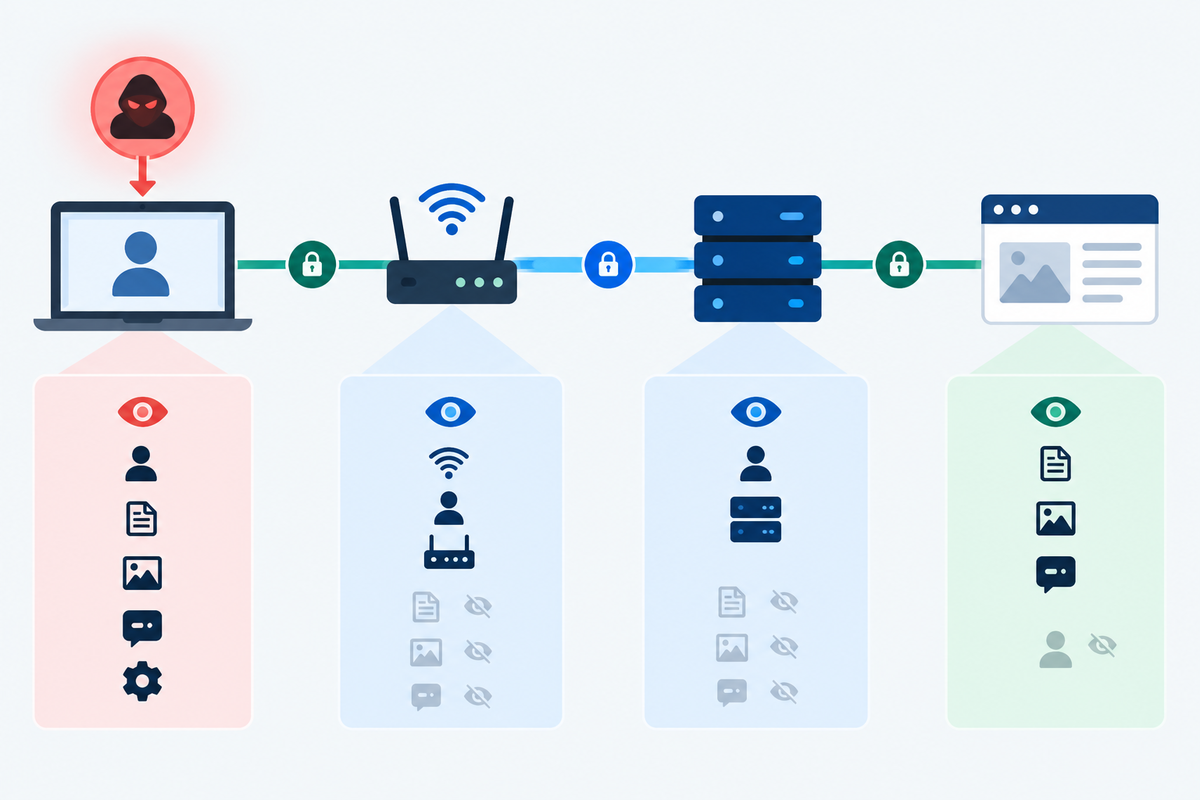
A VPN normally creates an encrypted tunnel between a client and a VPN endpoint. The local network and ISP may still see that the device is communicating with the VPN endpoint, along with traffic metadata such as timing and volume. They should not receive the inner traffic as readable application data when the tunnel is operating as intended.
The VPN endpoint then sends traffic onward. That creates a change in visibility, not the end of visibility.
| Observer | What a working VPN can usually change | What can still exist |
|---|---|---|
| Local network | It can prevent the local path from reading the tunnel payload. | The connection to the VPN endpoint and traffic patterns may remain visible. |
| ISP | It can move destination visibility away from the ISP for traffic carried through the tunnel. | The ISP can still see a connection to the VPN service and may see metadata. |
| VPN provider | It can become the next network carrying the traffic. | The provider can have access to connection data and may see traffic after the tunnel is terminated, depending on the service and the next encryption layer. |
| Website or application | It can see the VPN exit address instead of the device's public address for the routed request. | HTTPS, cookies, logins, browser signals and application logs still identify or link activity. |
The exact result depends on split tunneling, DNS handling, IPv6 behavior, application exceptions and the tunnel policy. A VPN that carries only selected routes cannot protect traffic that bypasses those routes.
VPN encryption is not the same as HTTPS
Original editorial image created for VPNVertex.
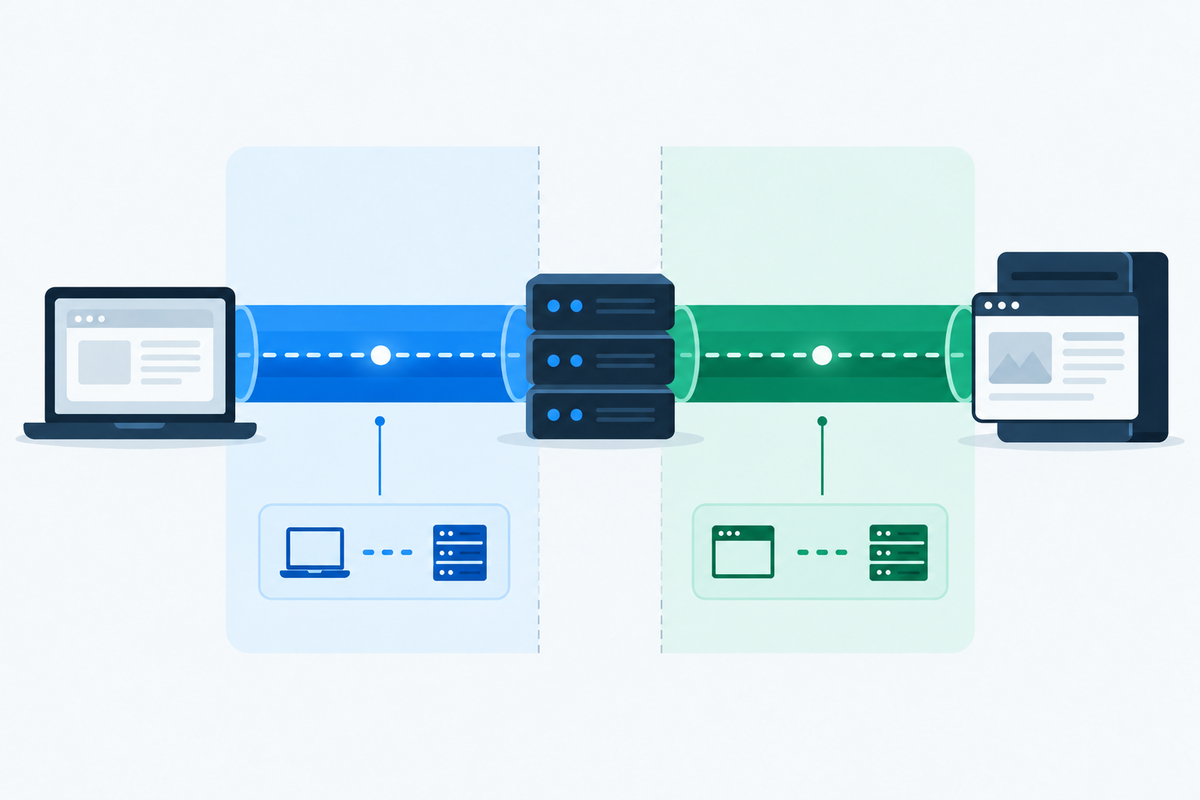
HTTPS protects an application connection between a client and a website or service. A VPN protects a path between the VPN client and VPN endpoint. These layers can operate together.
If a site uses HTTPS inside a VPN tunnel, the VPN adds a protected path across the local network and ISP while HTTPS protects the application session to the site. If the VPN disconnects, HTTPS may still protect the web session. If the site sees an account login or a tracking cookie, a VPN does not erase that association.
WireGuard is one example of an encrypted tunnel protocol. Its documentation describes peer public keys and an AllowedIPs mapping that influences which peer receives a packet and which source addresses are accepted from that peer. Its protocol page documents the cryptographic primitives and handshake design. That explains how the tunnel authenticates and encrypts traffic. It does not make the endpoint, application or user anonymous.
How to evaluate an encryption claim
Ask five plain questions before treating a VPN or tunnel as secure:
- Which two endpoints encrypt and decrypt the traffic?
- Which traffic is covered by the route or policy?
- How does each endpoint authenticate the other?
- What happens to DNS, IPv6 and traffic that bypasses the tunnel?
- What can each observer still learn from metadata, accounts and logs?
CISA guidance for communications infrastructure recommends limiting VPN gateway exposure and using strong cryptography for key exchange, authentication and encryption. That is an operational requirement, not a promise that one tunnel solves every security problem.
What network encryption cannot fix
Original editorial image created for VPNVertex.
Encryption does not remove malware from a device. It does not repair a compromised account, make a fraudulent website legitimate or prevent a user from sharing identifying information. It also does not guarantee that the VPN service has a privacy policy that matches the user's risk.
Use a VPN as one layer in a design. Keep HTTPS, software updates, endpoint protection, strong authentication and sensible access controls in the same conversation.
What we did not test
VPNVertex did not execute a tunnel or inspect a provider's infrastructure for this guide. The protocol and standards descriptions above come from the official technical sources listed below, not from a hands-on VPNVertex test.
Final takeaway
Network encryption protects data in transit, but its value depends on the protocol, endpoints, configuration and threat model. To connect that principle to realistic VPN limits, read how effective VPNs are.
Sources
- NIST confidentiality glossary, checked September 16, 2026
- NIST SP 800-175B, cryptographic mechanisms, checked September 16, 2026
- NIST FIPS 197, Advanced Encryption Standard, checked September 16, 2026
- WireGuard overview, checked September 16, 2026
- WireGuard protocol and cryptography, checked September 16, 2026
- CISA communications infrastructure hardening guidance, checked September 16, 2026