

Education
How effective are VPNs? It depends on the threat
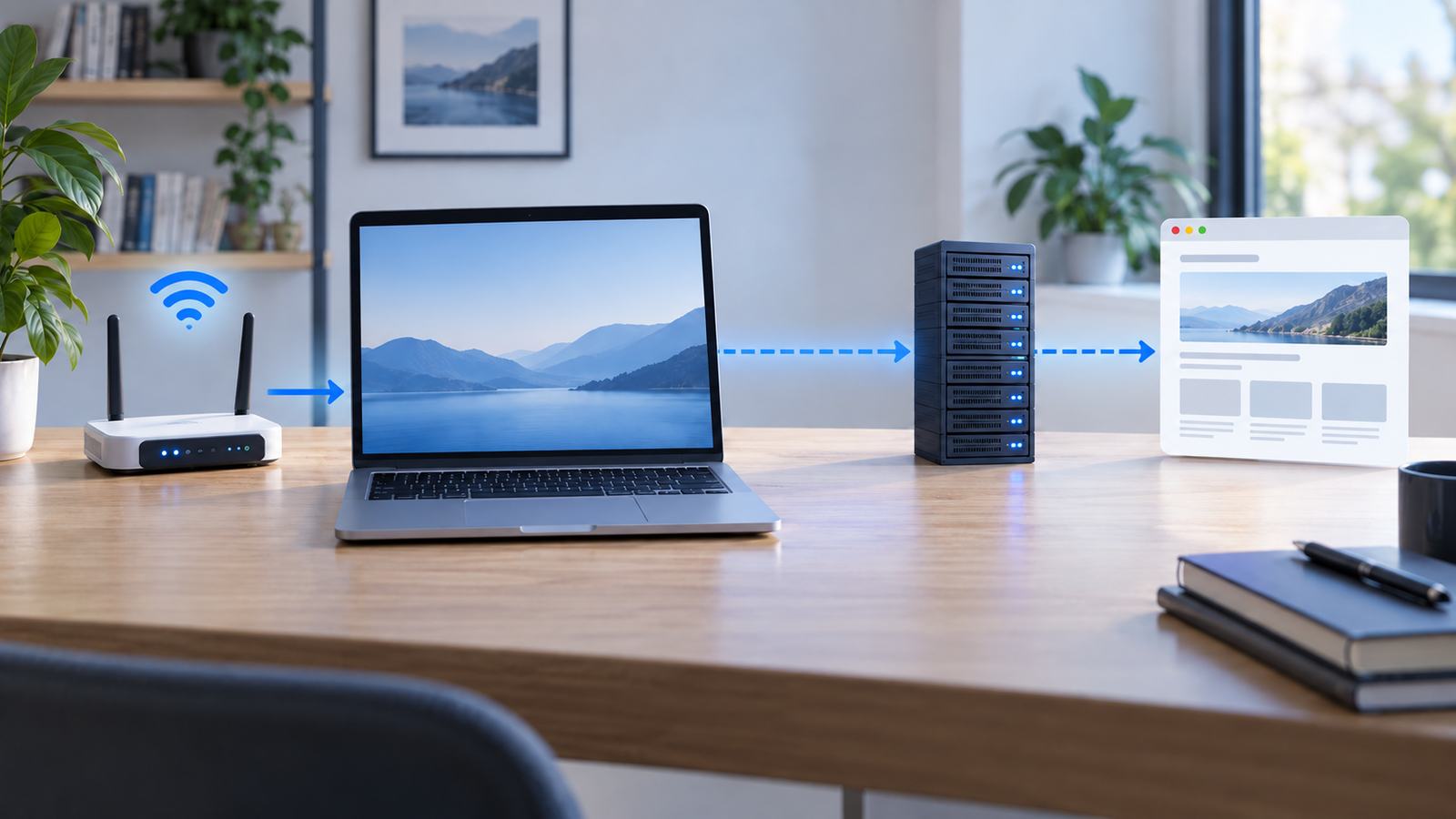
Threat model showing a device, VPN path and website
Illustrative diagram created for VPNVertex
Diagram, not a VPNVertex hands-on test.
A VPN can be effective when the problem is exposure on the path between a device and a trusted VPN endpoint. It can move the visible source of a connection, protect traffic across an untrusted local network and reduce what the ISP can learn from the destinations carried through the tunnel.
That is a narrower claim than "a VPN protects your privacy." A VPN does not make an account anonymous, clean an infected device or stop every form of tracking. The useful answer starts with the threat you are trying to reduce.
Effective against local network observation
A properly configured VPN creates an encrypted path from the device to the VPN endpoint. Someone on the same public Wi-Fi network should not be able to read the protected tunnel payload as ordinary application traffic. The VPN can also change the public source address seen by a destination service.
The Electronic Frontier Foundation describes the basic function in similar terms: a VPN routes the connection through a different network and masks the user's IP address from the destination. EFF also warns that advertising often overstates what a VPN can do.
The local network can still observe some facts. It may see that the device is connected to a VPN endpoint, and it may infer timing, volume or availability. A VPN is not a magic invisibility layer.
Effective against some ISP visibility
Traffic carried through a VPN is sent to the VPN endpoint rather than directly to the destination. Consumer Reports explains that this can keep an ISP from seeing the sites visited in the same way it would on a direct connection, while the VPN service becomes part of the path.
The trade is important. You move trust to another network. The VPN provider can have access to connection information and, after the tunnel terminates, may be able to observe traffic that is not protected by another layer. The provider's architecture, policies and logging practices matter.
Use HTTPS as a separate layer. HTTPS protects the application session to a website or service. The VPN protects the path to the VPN endpoint. With both layers present, the observers at different points see different parts of the connection.
Not effective against every threat
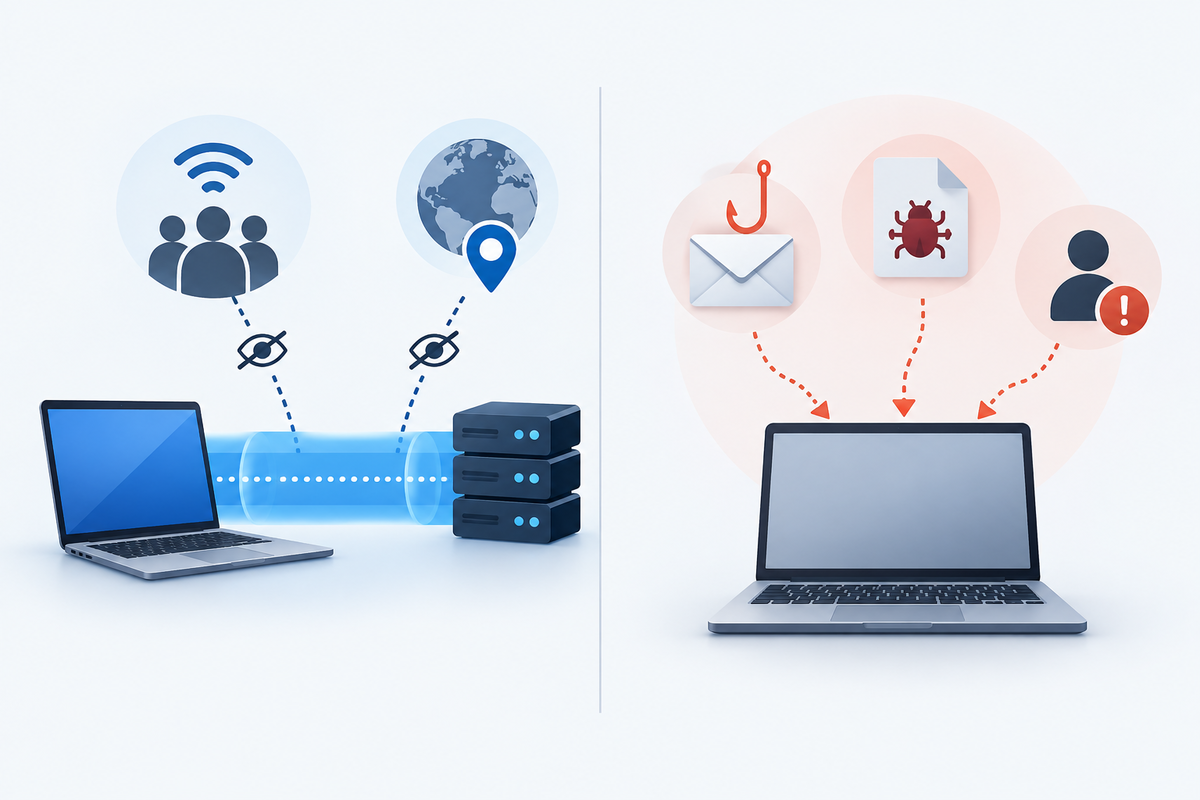
Original editorial image created for VPNVertex.
A VPN does not solve these problems by itself:
- Malware or a malicious browser extension on the device.
- A weak password or a stolen session cookie.
- A website that already knows the user through a login, account data or browser signals.
- A phishing page that uses HTTPS correctly.
- A service that records activity after the VPN endpoint sends the request onward.
- Traffic that bypasses the tunnel because of split tunneling, a DNS leak or an application-specific route.
Consumer Reports has also warned that third-party audits are not a guarantee that a VPN has no security flaws. They can provide useful evidence, but they do not replace checking the software, update process, account controls and operational history.
CISA guidance treats VPN gateways as systems that need hardening. It recommends limiting exposure where possible, allowing only the required ports and using strong cryptography for key exchange, authentication and encryption. That is a reminder that a VPN gateway can create risk when it is misconfigured or left exposed.
Test effectiveness by question
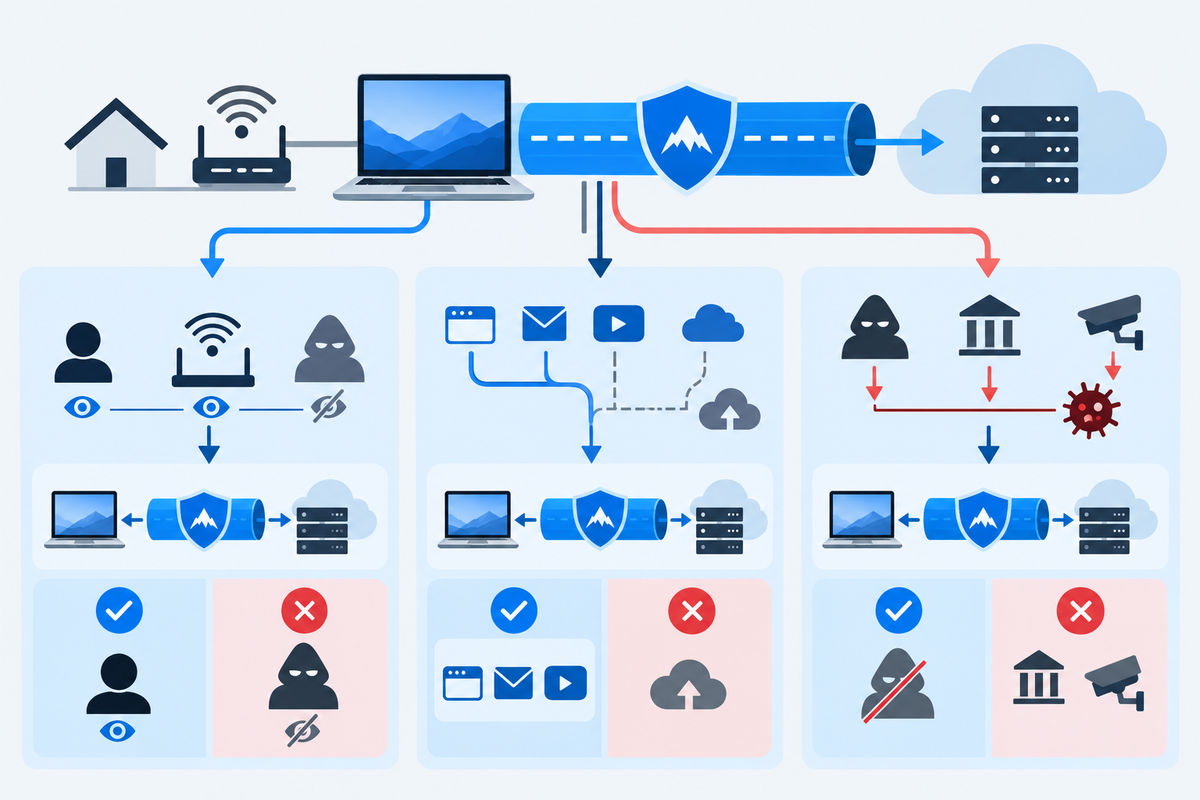
Original editorial image created for VPNVertex.
Do not ask only whether a VPN is connected. Ask whether it solves the specific problem:
| Threat or goal | What to verify | What a VPN does not prove |
|---|---|---|
| Untrusted public Wi-Fi | The intended traffic enters the tunnel and the endpoint authenticates correctly. | That the device is free of malware. |
| ISP destination visibility | The intended routes and DNS requests use the tunnel. | That the VPN provider cannot see connection data. |
| Hiding a home IP from a website | The request exits through the intended VPN endpoint. | That the site cannot link activity to a logged-in account. |
| Remote access to a private network | The tunnel, routes, firewall policy and return path all work. | That every private service is reachable automatically. |
| General online privacy | The service has a documented design and the device is configured consistently. | That a VPN provides anonymity or blocks all tracking. |
The test should match the route. A public IP check can confirm an exit address, but it cannot prove that an internal application route, DNS policy or split-tunnel exception is correct.
When a VPN is worth considering
A VPN is a reasonable tool when you need to reach a private network over an untrusted path, reduce direct exposure of a home or office IP address, or change which network carries a connection. For business use, pair it with device compliance, strong authentication, access controls and monitoring.
It is a poor substitute for software updates, endpoint protection, password hygiene, HTTPS or careful account use. If the threat is a malicious download or an account takeover, choose controls that address that threat directly.
What we did not test
VPNVertex did not test a specific provider, a public Wi-Fi network or a live tunnel for this guide. The article describes threat-model questions and the limits documented by the sources listed below, not a VPNVertex product result.
Final takeaway
A VPN can protect traffic between a device and the VPN endpoint, but it cannot replace endpoint security, account protection or careful browsing. Our network encryption guide explains where that protection starts and ends.
Sources
- EFF, Choosing the VPN That's Right for You, checked September 16, 2026
- Consumer Reports, Should You Use a VPN?, checked September 16, 2026
- Consumer Reports, VPN privacy and security practices, checked September 16, 2026
- CISA, communications infrastructure hardening guidance, checked September 16, 2026
- CISA, modern approaches to network access security, checked September 16, 2026