

Education
No-log VPNs: browsing records, account data and temporary logs explained
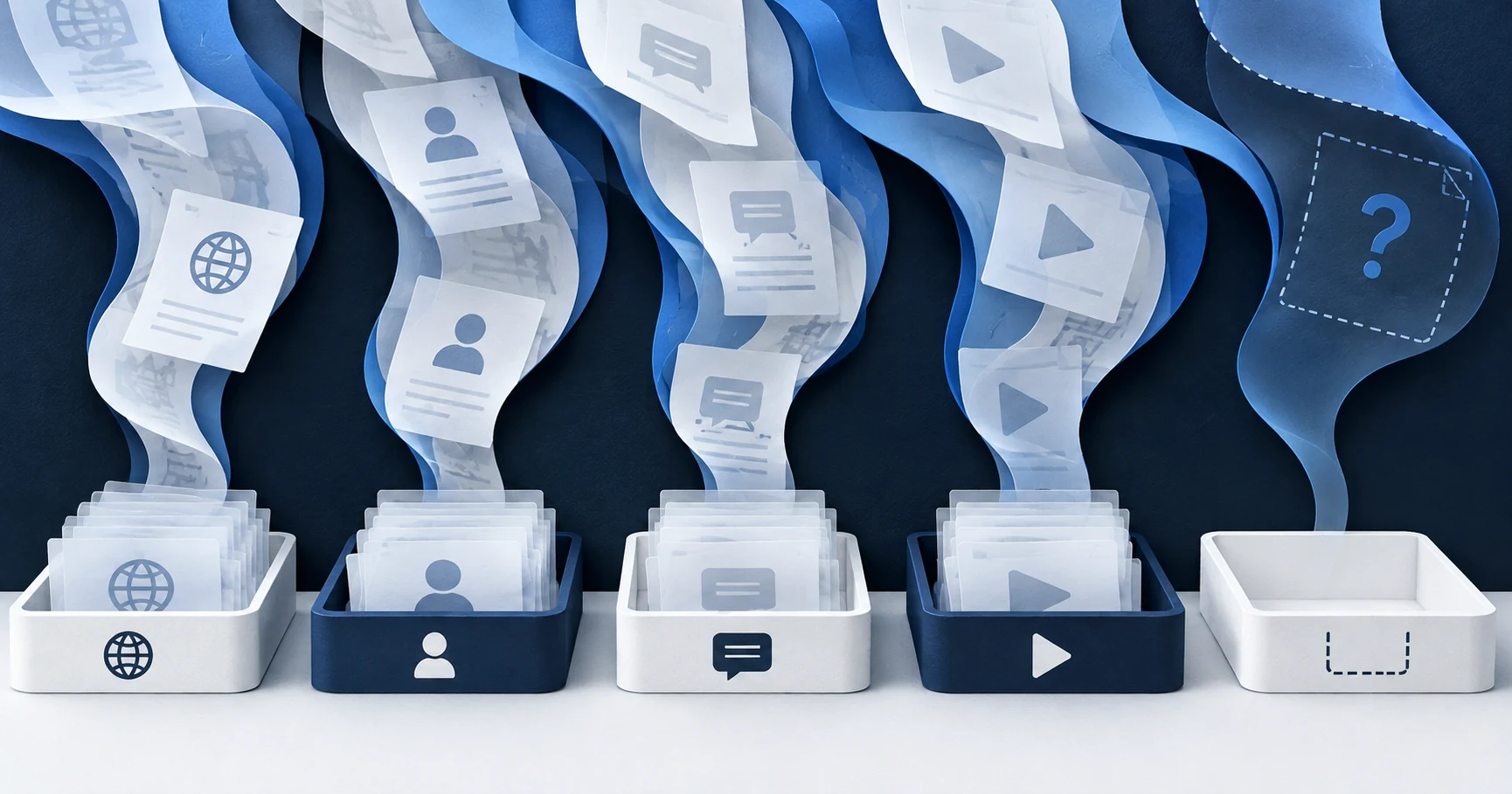
A no-log claim should be read by data category and retention condition.
A no-log VPN can still need an account record or payment information. The useful question is which data exists, why it exists and how long it remains. Browsing records, account data and temporary connection data should be examined separately.
Ask what is logged
Start with the VPN-specific privacy policy, then read the account policy it refers to. Proton separates those documents. Its VPN policy states that traffic and communication contents are not recorded, while the wider account policy addresses information needed for account operation, payments and security.
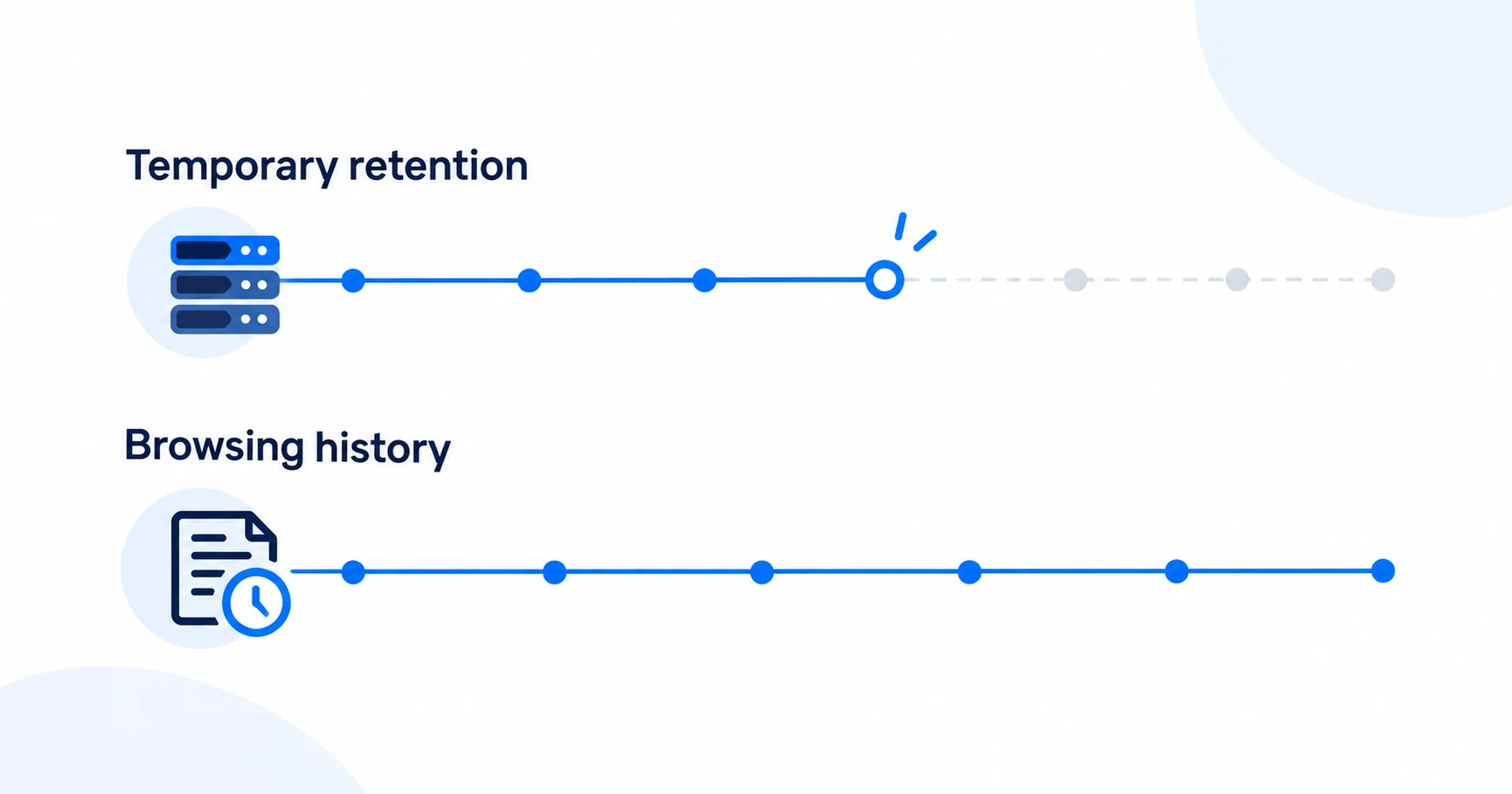
Surfshark's privacy policy provides another useful distinction: it describes temporary connection information and says that it is deleted within fifteen minutes after a session ends. That statement is different from retaining a browsing history. It is also more precise than assuming the slogan “no logs” means the service handles no data at all.
How this guide was researched
This guide compares published provider documentation and the limits stated in the sources below, reviewed on October 14, 2026. Recommendations follow the specific compatibility or plan requirement explained in the article. VPNVertex has not performed device, speed, leak or streaming tests for this guide. Suggested checks are tasks for the reader, not reported test results.
Our research methodology explains how we distinguish provider statements from independent evidence.
Compare statements about the same kind of data
| Policy example | Documented statement | What it does not establish |
|---|---|---|
| Proton VPN product policy | States that VPN traffic and communication contents are not recorded | That the separate account and payment systems hold no information |
| Proton account policy | Separately addresses account operation, payments and security information | A record of websites visited through the VPN |
| Surfshark privacy policy | Describes temporary connection information deleted within 15 minutes after session end | That no temporary data exists, or that the data is a browsing-history log |
These examples explain scope, not a privacy ranking. Compare matching categories and any independent evidence before drawing a conclusion about a provider. An undocumented field should remain unknown rather than receiving an invented zero.
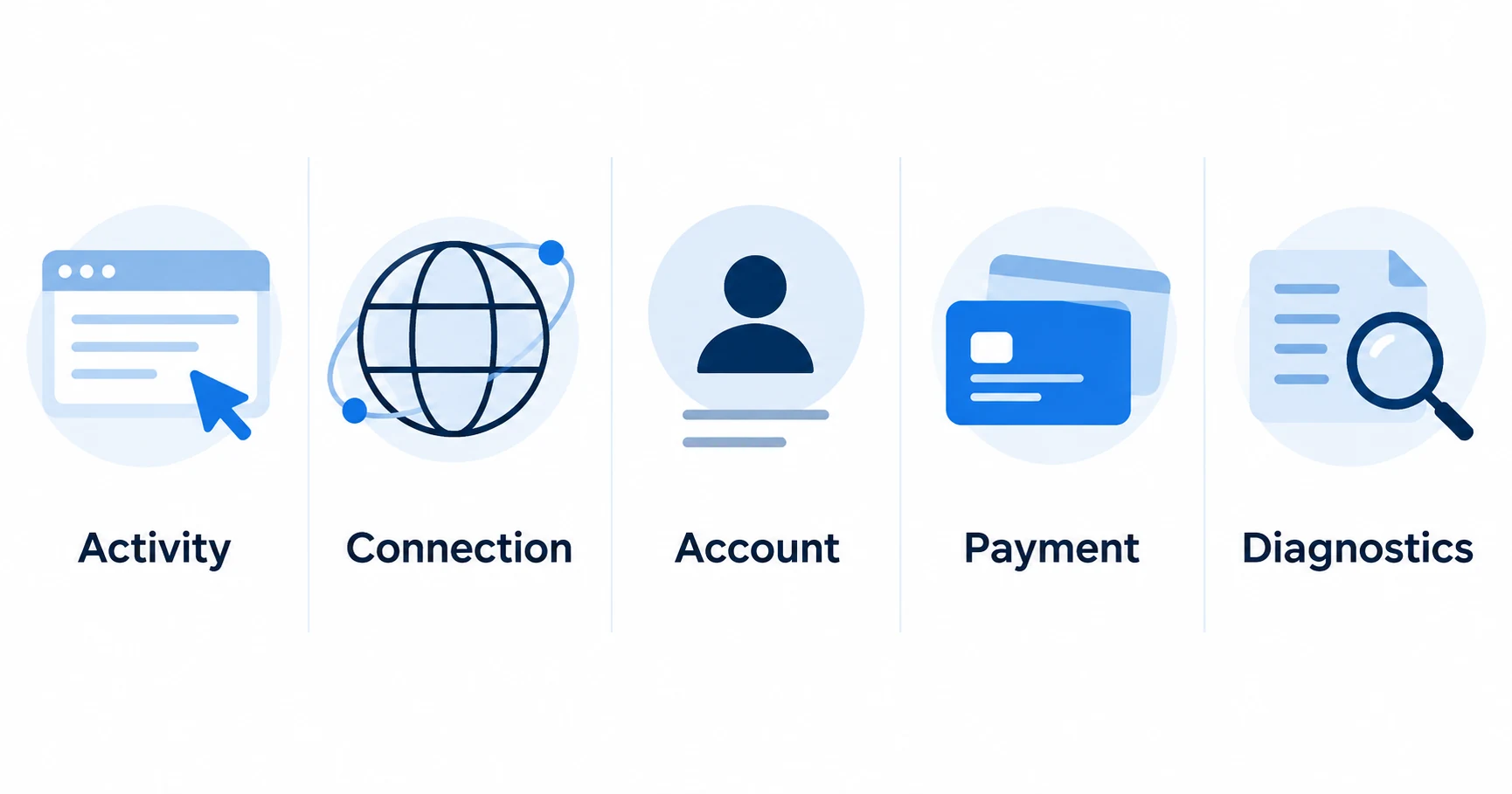
Separate these data categories
| Category | Examples to look for in a policy | Question to ask |
|---|---|---|
| VPN activity | Visited destinations, traffic contents, browsing records | Is activity recorded or retained, and can it be associated with an account? |
| Connection information | Session timestamps, originating IP, connection identifiers | Why is it processed and when is it deleted? |
| Account information | Account identifier, contact information, login security records | What is required, optional or controlled by settings? |
| Payment information | Transaction and billing records | Which information is held by the provider or payment processor? |
| Diagnostics and support | Crash reports or details you send in a ticket | Is collection optional, and what can a report contain? |
This is a reading framework, not a claim that every provider collects every item listed. Find each category in the actual policy and record what it says. If the scope or retention period is unclear, keep that uncertainty visible.
Temporary does not mean nonexistent
Surfshark describes temporary user identifiers, IP addresses and connection timestamps for operating its service. Its stated deletion period is within fifteen minutes after the session ends. The timing is tied to session termination; it should not be rewritten as “deleted every fifteen minutes regardless of connection state.”
A reader concerned about temporary association between an account and a connection may care about this distinction even if browsing content is not retained. Another reader may focus primarily on whether destinations or browsing activity are recorded. Those are different requirements, and a blanket privacy score can hide the difference.
The policy is a provider statement. It should not be presented as a VPNVertex inspection of production systems or a guarantee that no operational error can occur.
Read the account policy alongside the VPN policy
Proton's separate VPN and account documents illustrate why one policy page may not answer the entire question. A VPN-specific statement about traffic does not erase the information associated with account creation, payment or security operations.
Read login-history options and abuse-prevention provisions in their actual context. An account-security IP record is not automatically a log of the websites visited through the VPN. Equally, the absence of browsing logs should not be used to tell a reader that an account has no identifying information.
When comparing two services, use matching categories. Comparing one provider's VPN traffic statement with another provider's entire corporate account policy produces an uneven comparison.
An audit has a defined scope and date
An independent assessment can add evidence, but first establish what was examined. Was it an application, a no-logs control, server configuration or something else? Identify the date, version or environment and whether the full report is available.
A count of audits does not establish that every data category has been inspected or that a result applies indefinitely. Our guide to independent VPN audits covers how to read that evidence. This page focuses on the categories the policy and assessment need to address.
Open-source code is another separate source of information. It can make software available for inspection, but it does not by itself reveal the full operation of a hosted VPN service. The open-source VPN guide explains that boundary.
A short policy-reading checklist
- Find the policy for the specific VPN product.
- List activity, connection, account, payment and diagnostic information separately.
- Record the purpose and retention period where stated.
- Identify optional settings and the consequences of changing them.
- Check which independent evidence covers the relevant claim.
- Keep unanswered questions separate from verified statements.
A VPN also shifts part of the trust relationship from the local network to the VPN service. It does not prevent a website recognizing an account you sign into. For the basic traffic path, the VPN explainer provides the foundation.
No-log policy questions
Choose on a data requirement
Decide which records matter to your privacy requirement, then compare the policies and evidence category by category. Keep the provider's statement separate from independent verification. Before using an audit badge to settle the choice, read the audit scope checklist.
Sources
Provider statements are attributed below. Publication dates and current availability can differ; the review date records when the cited documentation was examined.
- Surfshark: privacy policy, VPN connection information
Reviewed October 14, 2026. - Proton: account privacy policy
Reviewed October 14, 2026. - Proton VPN: product privacy policy
Reviewed October 14, 2026.