

Education
Open-source VPNs: choose an app, a service or your own server

Visible source code does not by itself determine who operates the service.
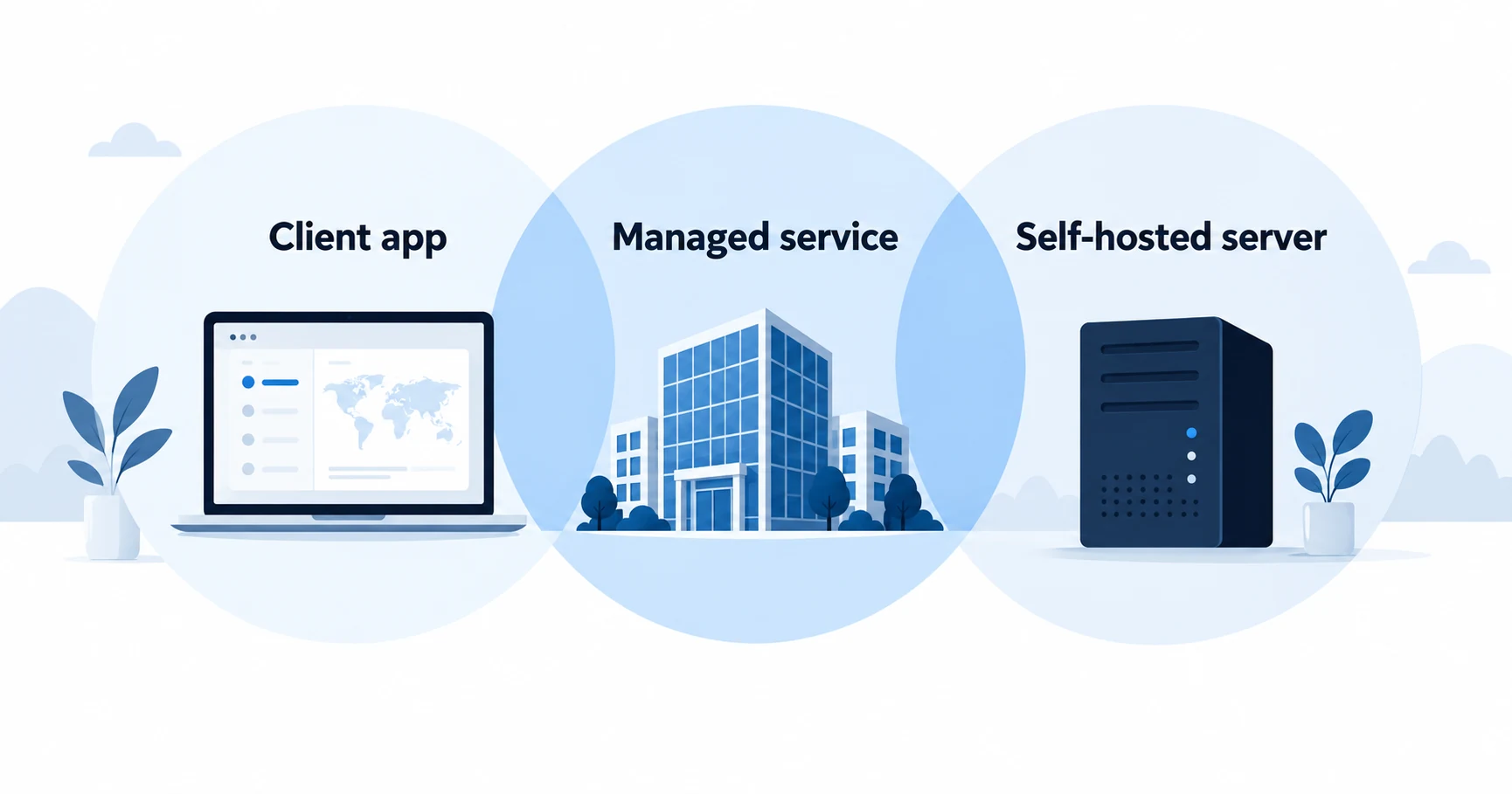
“Open-source VPN” can mean software you install, a service that operates servers for you, or a server you run yourself. Decide which of those jobs you need before comparing products. Downloading a client does not automatically provide a VPN endpoint.
Choose the operating model first
For a managed service, look for a provider that publishes its app code and operates the network you want to use. Proton VPN describes open-source applications within its hosted service. For a network you control, software such as OpenVPN Community or SoftEther can be part of a client-and-server setup, but you take on the work of running the endpoint.
Public source code provides something that can be inspected. It does not, by itself, prove that the software is free of defects, that someone has reviewed every change, or that the server operator keeps no logs.
How this guide was researched
This guide compares published provider documentation and the limits stated in the sources below, reviewed on October 14, 2026. Recommendations follow the specific compatibility or plan requirement explained in the article. VPNVertex has not performed device, speed, leak or streaming tests for this guide. Suggested checks are tasks for the reader, not reported test results.
Our research methodology explains how we distinguish provider statements from independent evidence.
Compare software with an operated service
| Example | What is supplied | Who still operates the service? |
|---|---|---|
| OpenVPN Community | Client/server software | You or the operator whose server you use |
| SoftEther VPN | Client/server VPN software | You or another chosen administrator |
| Proton VPN open-source apps | Inspectable client applications for a hosted service | The provider operates its hosted VPN infrastructure |
These are different categories of solution. Downloadable source code does not include a paid hosting account, server maintenance or proof of how every remote server is operated. Choose the responsibility you are prepared to take on before comparing projects.
Three different things you might be choosing
| Model | What you get | What you still need |
|---|---|---|
| Open-source client software | An application that can create a supported VPN connection | A compatible endpoint, configuration and credentials |
| Managed service with open-source apps | Apps plus access to provider-operated endpoints under a plan | A review of the plan, operator and privacy policy |
| Self-hosted VPN | A connection to a server or router you operate | Hosting, updates, keys, firewall configuration and maintenance |
A protocol belongs to another layer. WireGuard and OpenVPN describe ways to establish a tunnel; naming a protocol does not identify the company operating the endpoint or the payment model. The protocol comparison explains those differences.
Managed service: code access with an operated network
Proton's Linux information describes open-source apps as part of its VPN service. This model can suit someone who wants software transparency without administering a VPN server. The provider remains responsible for operating the endpoints, while you remain responsible for choosing a suitable plan and maintaining your device.
App source code and network operations answer different questions. The code can help reveal how a client works. It does not show every production-server setting, every organizational process or the full handling of account data.
Read the guide to browsing records and account data alongside any code-transparency claim. A service can publish its client and still require a separate assessment of its logging statements.
Self-hosting changes who does the work
OpenVPN Community distributes VPN software, and SoftEther provides client and server software. Neither fact means that downloading a package gives you a commercial service with selectable countries and a support team maintaining the endpoint for you.
Self-hosting can be appropriate when the goal is reaching a home or private network you control. You choose where the server runs and decide how accounts or keys are issued. You also need to apply updates, manage access and plan how to recover if the server becomes unreachable.
A rented server introduces another operator: the hosting company. A home endpoint uses your home connection. Those choices affect the connection path and who you trust. A server you control is not automatically an anonymity service or a geographically diverse network.
Before deploying anything, define the purpose: access to private resources, routing through a trusted endpoint, or learning how VPN software works. Each purpose can imply a different configuration. The WireGuard setup guide addresses one specific implementation route.

What to inspect beyond the license
- The relevant repository: determine whether the code covers the client, server or only a supporting component.
- Maintenance: review the release and security-update process for the version you will use.
- Distribution: obtain software from the official project or a clearly identified package maintainer.
- Independent review: establish what was assessed and when, rather than treating a badge as a complete answer.
- Operational responsibility: identify who controls the endpoint, credentials and updates.
A package maintained by a third party is not necessarily the same support arrangement as a provider's official package. Our Linux package comparison gives examples where distribution method changes available features or support.
If an independent audit matters to your decision, read its scope using the VPN audit guide. Open code and an assessment can complement each other; neither should be converted into a promise of perfect security.
Free software can still have operating costs
A software license price is only part of the cost of self-hosting. A server may require a hosting subscription, storage, backups and time to maintain. A managed VPN plan charges for an operated service with its own access and feature restrictions.
Compare those arrangements against the job rather than calling one “free” and the other “paid” without context. If your main goal is reaching a device at home, buying a consumer VPN with distant exit servers may not solve the problem. If your goal is a supported everyday VPN app, maintaining a server may be unnecessary work.
Open-source VPN questions
Match the model to the job
Choose a managed service when you want an operated network, and self-host when controlling the endpoint is part of the requirement. In either case, identify what the published code actually covers. If the remaining question is data retention, continue with the no-log policy framework.
Sources
Provider statements are attributed below. Publication dates and current availability can differ; the review date records when the cited documentation was examined.
- OpenVPN: Community software
Reviewed October 14, 2026. - SoftEther: VPN client and server software
Reviewed October 14, 2026. - Proton VPN: Linux apps and free service
Reviewed October 14, 2026. - Proton VPN Support: Linux setup and package limitations
Reviewed October 14, 2026.