

Cross-silo
PIA vs NordVPN 2026: torrenting, speed, and no-logs
The PIA vs NordVPN choice usually comes down to two priorities: torrenting and budget on one side, raw speed and a longer audit record on the other. Private Internet Access offers port forwarding, unlimited devices, and a no-logs policy that has been tested in actual court cases. NordVPN counters with the faster NordLynx protocol, a Panama base outside the surveillance alliances, and repeated independent audits. This comparison breaks down where each one wins so you can pick on evidence rather than brand.
Quick verdict
For most people, NordVPN is the stronger all-round VPN.
It is faster on NordLynx, it is based in privacy-friendly Panama, and its no-logs claim has been audited more than once by PwC and Deloitte. Private Internet Access is the better pick for one specific job: torrenting. It ships port forwarding, supports an unlimited number of devices, costs less on a long plan, and its no-logs policy held up when US courts actually requested data. If you seed torrents or want the lowest long-term price, PIA wins. For everything else, NordVPN leads.
PIA vs NordVPN at a glance
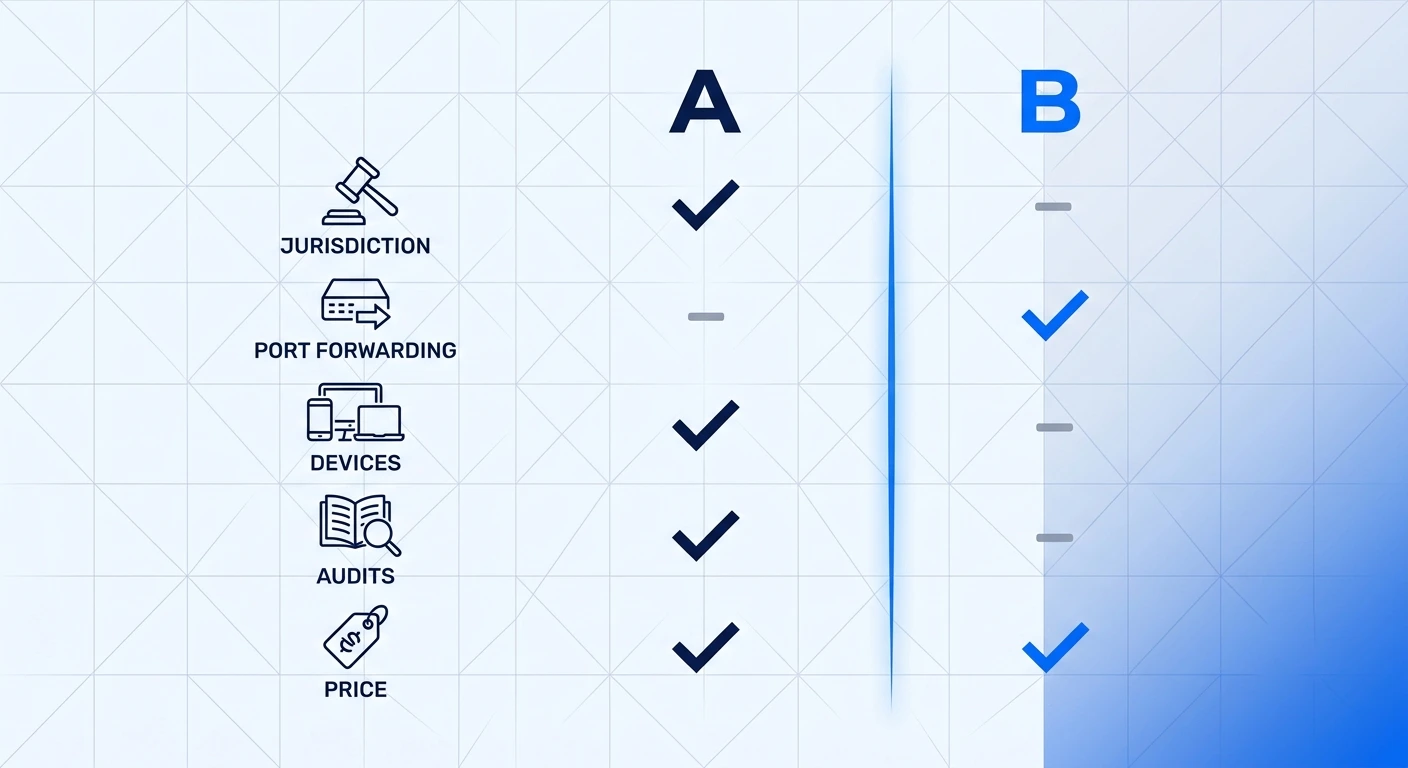
| Feature | Private Internet Access | NordVPN |
|---|---|---|
| Jurisdiction | United States (Five Eyes) | Panama |
| No-logs evidence | Court-tested, plus Deloitte audit | PwC and Deloitte audits |
| Port forwarding | Yes | No |
| Simultaneous devices | Unlimited | 10 |
| Fastest protocol | WireGuard | NordLynx |
| RAM-only servers | No | Yes |
| Ad and tracker blocker | MACE | Threat Protection |
| Open-source apps | Yes | Apps and libraries audited |
| Best for | Torrenting and budget | Speed and all-round use |
| Approx price (long plan) | Around $2 / mo | Around $3 to $4 / mo |
Jurisdiction and no-logs
This is the most interesting split between the two, because the headline and the evidence point in opposite directions. NordVPN is based in Panama, outside the Five and Fourteen Eyes intelligence-sharing agreements, which is the privacy-friendly answer on paper. Its no-logs claim is backed by repeated independent audits from PwC and Deloitte.
PIA sits in the United States, inside the Five Eyes, which sounds worse. The catch is that PIA’s no-logs policy is the most battle-tested in the industry. In US court proceedings, the company was asked to hand over user data and had none to give, because it does not keep connection logs. That is a stronger proof than any audit, because it happened under legal compulsion rather than a scheduled review. PIA also commissioned a Deloitte no-logs audit to back the court record. So the honest reading is that jurisdiction favors NordVPN, but real-world proof favors PIA. For how the audit firms differ, see our guide to VPN independent audits.
Speed
Both providers run WireGuard, the modern protocol that made VPN speeds far less of a compromise. NordVPN wraps it in NordLynx, a custom implementation that consistently posts strong results in public benchmarks and holds throughput well on long-distance connections. PIA’s WireGuard is fast too, and on nearby servers the difference is small. The gap widens on distant servers and during heavy load, where NordLynx tends to keep more of the line speed. If you routinely connect to servers far from your location or want the smallest speed penalty for 4K streaming and gaming, NordVPN has the edge. Day to day on a local server, both feel quick. The full speed picture is in our NordVPN review.
Torrenting
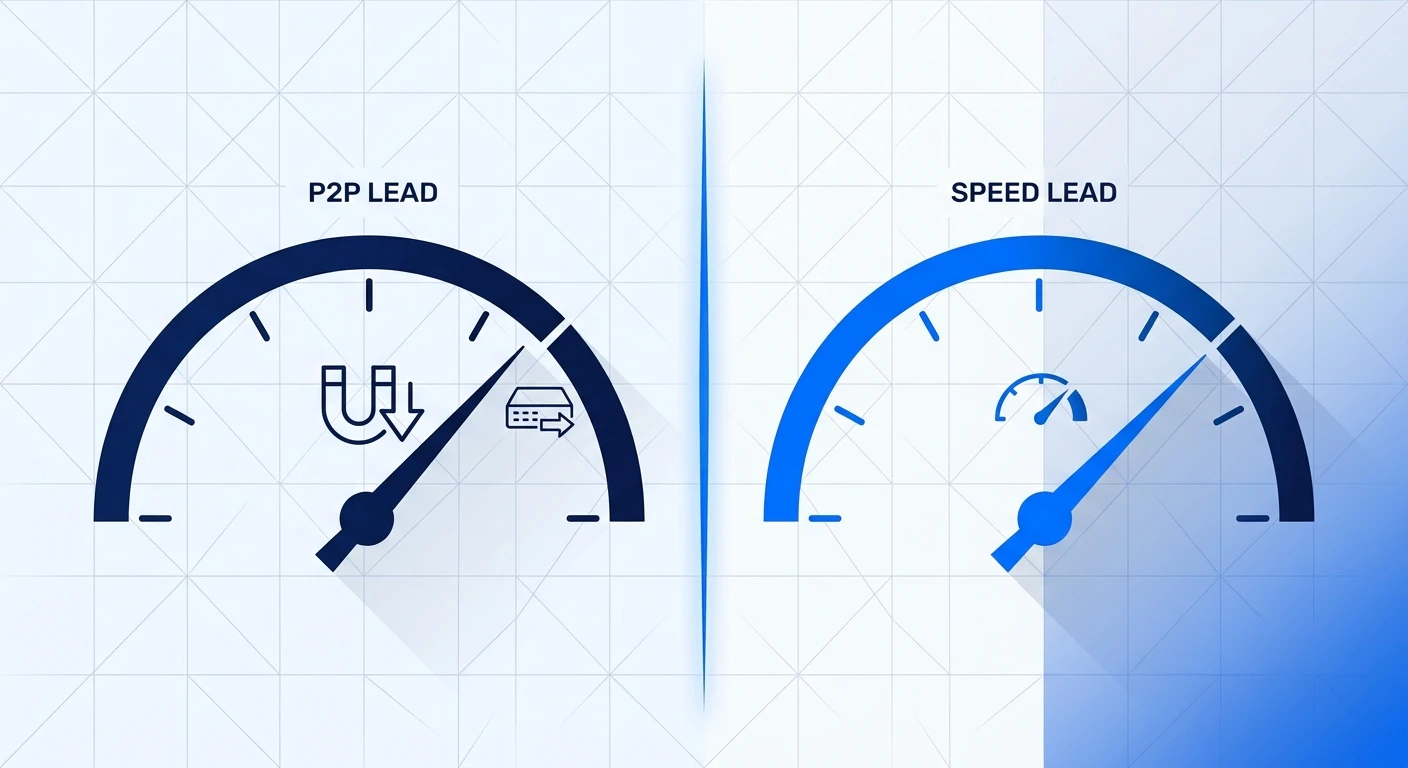
This is where PIA earns its following. Three features make it the torrenting favorite. Port forwarding lets your client accept incoming connections, which improves seeding and connection counts. Unlimited simultaneous devices means a seedbox-style setup and your everyday devices share one subscription. The MACE feature blocks ads and trackers at the DNS level. PIA also allows peer-to-peer traffic across its whole network rather than confining it to a handful of servers.
NordVPN handles torrenting well but differently. It runs P2P-optimized servers, keeps the kill switch tight, and its speed advantage helps large downloads finish faster. The missing piece is port forwarding, which NordVPN does not offer. For a leecher who only downloads, that rarely matters. For a dedicated seeder, it is the deciding factor in PIA’s favor. Our best VPN for torrenting guide ranks both in their wider context.
Port forwarding is the single feature most likely to settle this comparison. If you seed and need it, PIA is the answer. If you only download, NordVPN’s speed and audit record make it the safer all-round choice.
Server network and specialty servers
PIA advertises one of the largest server networks in the industry, with dense United States coverage that reaches every state. That breadth helps in two ways. You can almost always find a lightly loaded server, and a state-level US presence is useful for regional services that check your location. NordVPN runs a smaller but still large fleet across more than 110 countries, and it adds specialty servers that PIA does not match feature for feature. Those include Double VPN for two-hop routing, Onion over VPN, P2P-optimized servers, and obfuscated servers for restrictive networks. If you need a specific advanced routing mode, NordVPN has the deeper toolkit. If you want raw server density and US state coverage, PIA leads. Our guide to VPN obfuscation covers where stealth servers actually help.
Streaming and unblocking
This is the clearest win for NordVPN. It unblocks the major libraries, including Netflix in several regions, Disney Plus, and BBC iPlayer, and its built-in SmartPlay DNS keeps streams working without manual setup. The large address pool and a fast rotation cycle let it stay ahead of the proxy detection that streaming platforms run. PIA can unblock some catalogs, but it is less consistent and slower to rotate flagged addresses, which is the trade-off for a network tuned around privacy and torrenting rather than media. If streaming matters to you alongside torrenting, NordVPN is the safer pick, and our best VPN for streaming guide ranks it against the rest. For pure torrent privacy on a budget, PIA still holds its ground.
Privacy and security features
Both providers cover the security basics well, with a few differences worth weighing. PIA’s standout is that its apps are fully open-source, so anyone can inspect the code rather than trust a description of it. That transparency, paired with the court record, is a strong privacy story.
NordVPN’s standout is its RAM-only server fleet. Every server runs from volatile memory with no persistent disk, so a reboot wipes it and there is nothing to seize from a powered-down machine. It also bundles Threat Protection, which filters malware, trackers, and malicious sites, and Meshnet for private device-to-device links. Both run a reliable kill switch and modern encryption, so neither is a weak choice on security. The difference is philosophical: PIA leans on open code and legal proof, NordVPN on diskless infrastructure and a broader feature set.
Apps and ease of use
Both providers ship apps for Windows, macOS, Linux, iOS, and Android, plus browser extensions and router support, so platform coverage is not the deciding factor. The difference is in the experience. PIA leans toward power users. Its apps are open-source and expose granular controls, including the encryption cipher and the connection port, which is exactly what a privacy-minded tinkerer wants and a little much for a first-time user. NordVPN takes the opposite approach with a cleaner, map-based interface and one-click features that a beginner can use without reading a manual. Neither is hard to run. If you like to inspect and tune every setting, PIA suits you. If you want a VPN that simply works out of the box, NordVPN is the friendlier daily driver.
Pricing
PIA is the cheaper of the two on a long commitment, landing at around 2 dollars a month on its multi-year plan, with the unlimited-device allowance making it even better value for a household. NordVPN sits higher, at around 3 to 4 dollars a month on the two-year plan, depending on the tier and current promotion. Both run a 30-day money-back guarantee, so you can confirm the service works for your use case before committing. The price gap is real but small in absolute terms, so for most buyers it should be the tie-breaker rather than the headline, behind torrenting needs and speed.
What users report
Aggregated reports on Trustpilot and the privacy communities on Reddit line up with the spec comparison. PIA users consistently praise the value, the torrenting performance, and the transparency of open-source apps backed by the court record, with the most common reservation being its United States base. NordVPN users highlight the speed and reliability across servers and the breadth of features, while the recurring complaints center on auto-renewal pricing and the occasional need to update the app. Neither provider shows the pattern of unresolved no-logs doubts or sudden outages that sinks weaker services. Set against our coverage of VPN independent audits, the user sentiment for both reinforces that these are two of the more trustworthy names, separated mainly by use case rather than by quality.
Which should you pick
The PIA vs NordVPN decision is cleaner than the spec sheet suggests once you know your main use.
Choose PIA if
- You seed torrents and need port forwarding.
- You want the lowest long-term price.
- You run many devices and value unlimited connections.
- Open-source apps and a court-tested no-logs record matter more to you than jurisdiction on paper.
Choose NordVPN if
- You want the fastest speeds for streaming, gaming, and long-distance servers.
- You prefer a base outside the Five and Fourteen Eyes.
- You want extras such as Threat Protection, Meshnet, and RAM-only servers.
- You value the longest independent audit history.
If neither feels like a clean fit, our NordVPN vs Surfshark comparison covers another popular value matchup.
For the provider-specific evidence behind this comparison, read our full Private Internet Access review.
FAQ
Final word
PIA vs NordVPN is a close call, because both are genuinely good VPNs with no-logs records you can actually point to, which is rarer than it should be.
The split is about priorities. NordVPN is the faster, more feature-rich all-rounder with a Panama base and the longest audit history, and it is the right default for most people. PIA is the specialist: port forwarding, unlimited devices, the lowest long-term price, and a no-logs policy proven in court. Decide on your main use, torrenting and budget or speed and features, and the winner falls out quickly. For another angle on NordVPN against a privacy-first rival, read our NordVPN vs Proton VPN comparison.
