

Streaming
Turkey VPN 2026: best picks + legality guide
Turkey VPN picks for 2026, focused on obfuscation for Turkish ISP-level Turkey VPN blocks, US Netflix from Istanbul, and Turkish expats staying connected to US banking. Turkey VPN legal status, obfuscation servers, and Erdogan-era bans covered below.
Our verdict
NordVPN is the strongest overall pick for reliable privacy and obfuscation in Turkey.
It has the clearest audited track record and the widest fallback across common devices. Surfshark is the value alternative when unlimited connections matter.
Why you need a Turkey VPN
A Turkey VPN is a routing tool that sends your traffic through an encrypted tunnel to a server outside (or inside) Turkey, giving you an IP address that does not sit behind Turkish ISP filters. In a country of roughly 85 million people, with a documented pattern of temporary platform shutdowns during elections, protests, or security incidents, that routing matters more than it does in, say, Germany or Canada.
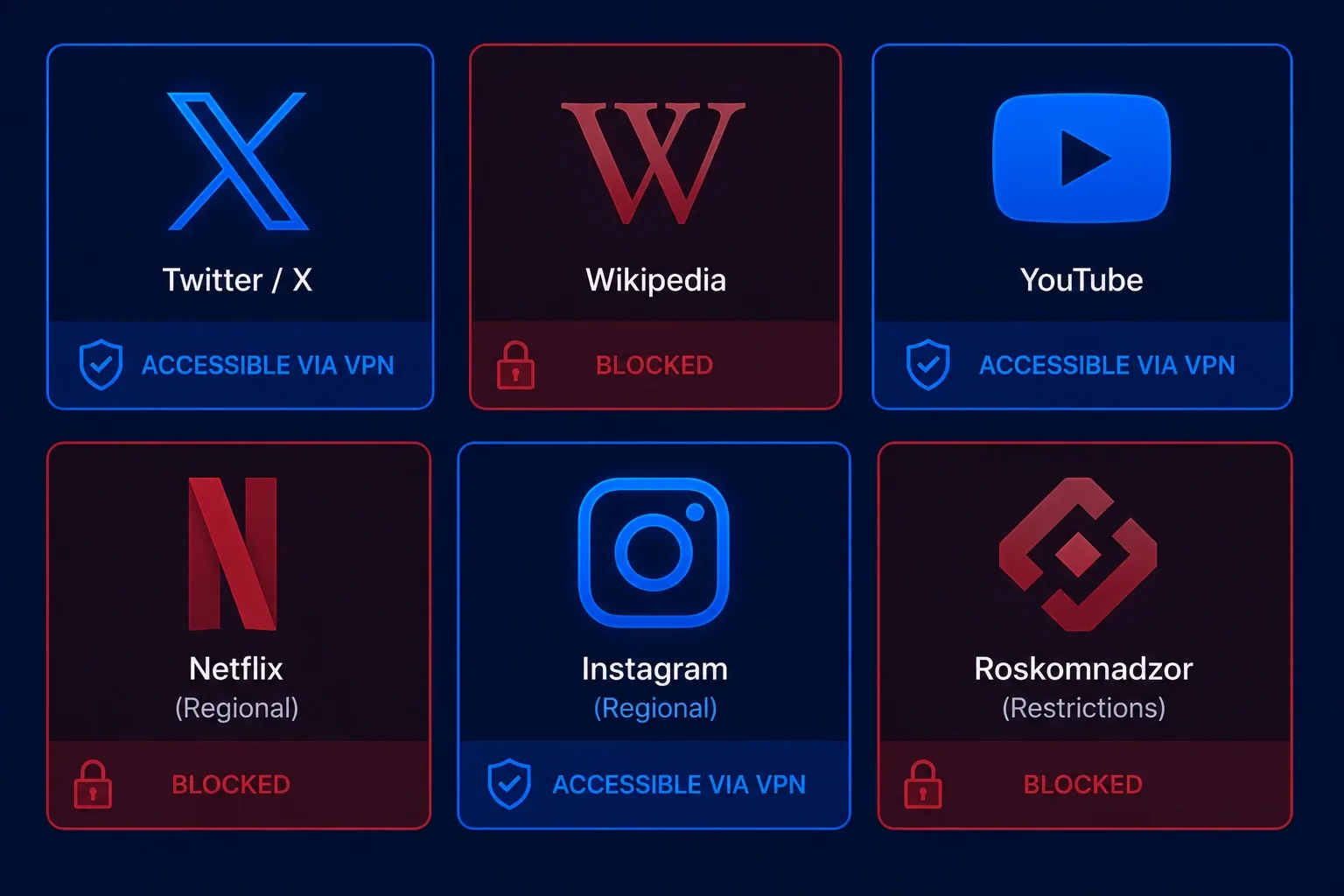
Three real problems push people toward an encrypted tunnel here. First, platform blocks. Wikipedia was blocked from April 2017 to December 2019. Twitter (now X) has been throttled or restricted during earthquakes, terror attacks, and political events, most visibly after the February 2023 earthquakes. YouTube has been blocked multiple times historically. Second, ISP-level surveillance. Local providers are legally required to retain traffic metadata under BTK regulations. Third, geo-blocked streaming. Netflix, BBC iPlayer, Hulu, and US banking portals often refuse Turkish IP addresses or serve a stripped catalog. For background on the pattern of blocks, see the Wikipedia record of internet censorship in Turkey and the ongoing Human Rights Watch Turkey country page.
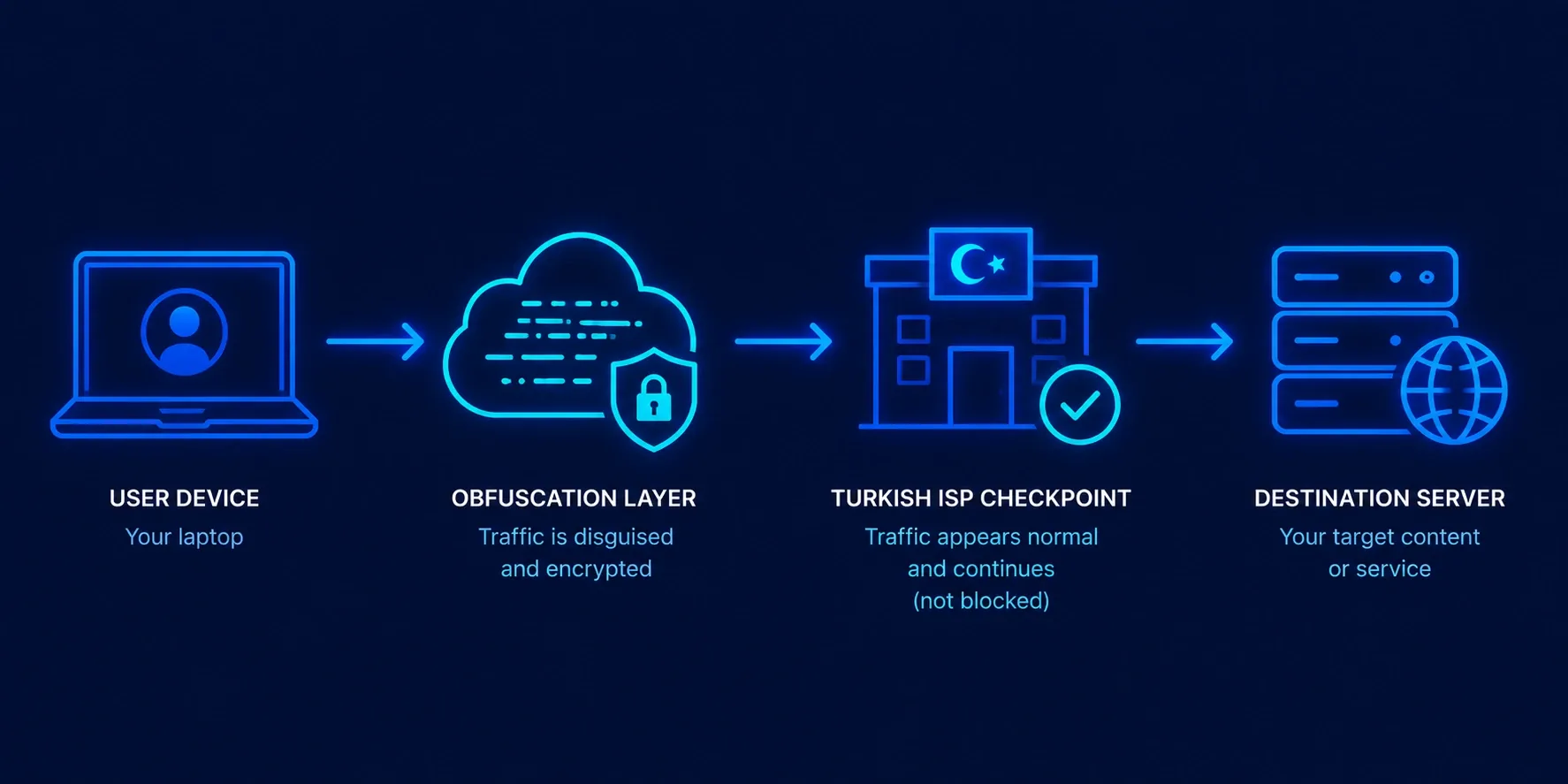
Because Turkey also targets some commercial VPN provider IP ranges during high-tension periods, a plain client sometimes fails to connect from an Istanbul or Ankara ISP. What works reliably is a provider with obfuscation, meaning the tunnel traffic is disguised as ordinary HTTPS. That single feature separates a useful setup from a broken one.
Best Turkey VPN picks at a glance
Three providers stand out for Turkish conditions in 2026, judged on obfuscation quality, server proximity, and independently audited no-log claims:
- NordVPN: obfuscated servers, NordLynx protocol, Turkish plus Greek and Bulgarian neighbors for low latency, four public no-log audits.
- ExpressVPN: Lightway protocol, Istanbul-adjacent European hubs (Sofia, Athens, Bucharest), TrustedServer RAM-only infrastructure, MediaStreamer for TVs.
- Surfshark: NoBorders + Camouflage modes for restrictive networks, unlimited simultaneous devices, aggressive pricing around 2 to 3 dollars a month on multi-year plans.
NordVPN for Turkey: detailed review
My top pick is NordVPN. The relevant technical stack is three parts. NordLynx is Nord's WireGuard implementation, which typically holds 70 to 90 percent of a fiber line, so a 300 Mbps Turk Telekom or Turkcell Superonline connection stays well above 4K streaming thresholds. Second, obfuscated servers are exposed as a separate category in the app: those endpoints wrap the handshake so DPI (deep packet inspection) systems used by some Turkish ISPs cannot easily fingerprint the tunnel. Third, Nord operates servers in Turkey plus dense neighbor coverage in Greece, Bulgaria, and Romania, which sit around 30 to 45 ms from Istanbul on typical fiber.
The no-log posture matters for a country with mandatory ISP data retention. Nord's policy has been independently audited four times by Deloitte (most recently 2023), and the network runs entirely on diskless RAM servers, meaning a physical seizure recovers nothing. Threat Protection blocks Turkish ad-tracker domains that follow you across news sites. Meshnet lets an expat route a laptop in New York through their own home box in Ankara for banking that only accepts Turkish IPs. For deeper detail see our full NordVPN review, and for background on how obfuscation works see our guide to VPN obfuscation.
Pricing sits around 3 to 4 dollars a month on the two-year plan with a 30-day refund window.
ExpressVPN for Turkey: detailed review
ExpressVPN is the safe, boring recommendation for anyone who wants the client to just work. Lightway is Express's proprietary lightweight tunnel, built in about 2000 lines of code (versus tens of thousands for OpenVPN), which reduces attack surface and reconnects in roughly a second when a Turkish mobile network hands off between cells.
Express does not publicly list a physical Istanbul server, but the surrounding hubs in Sofia, Athens, Bucharest, and Nicosia average around 40 ms of ping from western Turkey. TrustedServer means every server runs in RAM and wipes on reboot, which was validated by a 2022 KPMG audit of the no-log policy. MediaStreamer is a DNS-based unblocker for smart TVs and consoles that do not accept a client, useful for casting Turkish content to a US living-room TV.
What Express lacks is a labeled "obfuscated" server list. In practice Lightway on port 443 already looks like HTTPS to most DPI systems, and users on Turkish networks report consistent connections. Pricing is higher, around 6 to 7 dollars a month on the annual plan, with a 30-day refund. For a second country example with different laws and infrastructure, compare our Mexico VPN guide. If Turkey is one stop in a broader travel pattern, see our best VPN for digital nomads guide.
Surfshark for Turkey: detailed review
Surfshark is the value pick in this roundup. NoBorders mode detects restrictive networks and automatically switches to obfuscated protocols. Camouflage (their name for scramble) hides the fact that you are using a tunnel at all, useful if the network you are on runs deep packet inspection. Rotating IP quietly cycles your assigned address every few minutes without disconnecting.
The differentiator most buyers actually care about is unlimited simultaneous devices on one account. A family of four in Istanbul with laptops, phones, a Fire TV, and a router covers everything on a single subscription. Server coverage includes physical or virtual endpoints in Turkey plus every neighbor, and Surfshark's no-log claim was audited by Deloitte in 2023. Pricing on a two-year plan lands around 2 to 3 dollars a month with a 30-day refund.
The caveat: Surfshark's speeds are competitive but not the absolute fastest. For a household streaming 4K plus gaming at the same time, NordLynx or Lightway edges it out. For pure censorship circumvention and price, Surfshark is hard to beat.
Is using a Turkey VPN legal?
This is not legal advice; check current laws with Türkiye Cumhuriyeti Bilgi Teknolojileri ve İletişim Kurumu (BTK) or a Turkish attorney before acting on anything in this section.
Using a VPN in Turkey is not itself criminalized as of 2026. There is no statute that says "installing a VPN is a crime." What Turkey has done, repeatedly, is order ISPs to block the websites, apps, and IP ranges of specific commercial providers, most visibly in a wave of provider-level blocks starting in 2016 that targeted the marketing domains and some server IPs of major companies. That is why obfuscation matters: a connection that looks like ordinary HTTPS is not straightforwardly blockable at the ISP layer.
What is illegal in Turkey is the underlying content some people use a tunnel to reach: insulting the president (Article 299 of the penal code), spreading "disinformation" (Law 7418 passed October 2022), and material deemed a threat to national security. A VPN does not create legal immunity for those acts; it changes your routing, not your jurisdiction. The documented history of censorship in Turkey and reporting by Human Rights Watch on Turkey both underscore that the risk vector is speech and journalism, not the mere use of a tunnel.
Practical read: tourists and expats using an encrypted tunnel to reach US Netflix, US banking, or work Slack are extremely unlikely to face legal issues. Journalists, activists, and political dissidents should treat routing as one layer in a broader operational security setup, not as a solved problem.
Turkey VPN for Erdogan-era bans on Twitter, Wikipedia, YouTube
Turkey has one of the most documented histories of temporary platform blocking in Europe. Wikipedia was inaccessible from Turkish ISPs for 991 days between April 2017 and December 2019 before the Constitutional Court ordered it restored. Twitter has been throttled during multiple political events, including the aftermath of the February 2023 earthquakes. YouTube was blocked repeatedly across 2007 to 2014. Access to WhatsApp, Telegram, and other platforms has been temporarily restricted during specific political incidents.
A working setup handles these blocks in one step: connect to a server outside Turkey with obfuscation enabled, and DNS resolution plus routing then happen against the foreign ISP, not the Turkish one. During the 2016 to 2020 provider-level clampdowns some services stopped connecting from Turkish ISPs entirely. The three providers above stayed reachable because their obfuscated modes wrap the handshake in what looks like HTTPS, which a Turkish ISP cannot cheaply distinguish from a normal browser talking to a bank. For more restrictive-network guidance, our best VPN for China analysis explains which obfuscation modes hold up under blocking.
Access restrictions differ by country and network. Our YouTube access guide compares five approaches, their limits, and when official support or network policy should take priority.
Watch Turkish content abroad
The reverse problem is common too: Turkish diaspora in Germany, the UK, and the US wanting TRT (state broadcaster), Show TV, Star TV, Kanal D, and the Turkish Netflix catalog. TRT geo-restricts some live channels to Turkish IPs, and Netflix Turkey has different licensing than Netflix US, including Turkish original dramas that never leave the local library.
A Turkish server solves both problems. Nord operates servers physically in Turkey; ExpressVPN uses nearby European hubs plus (historically) virtual Turkish endpoints; Surfshark maintains Turkish server presence. Connect, refresh, and the streaming service serves the Turkish catalog. Round-trip latency from New York to Istanbul is roughly 130 to 160 ms on fiber, which is fine for 1080p and 4K video where the client buffers ahead. For broader streaming setup see our best VPN for streaming guide.
Best Turkey VPN for US expats
American expats in Istanbul, Antalya, or Izmir face a specific stack of problems that routing largely solves. Chase, Bank of America, Fidelity, and Vanguard often flag or block Turkish IP logins as fraud, forcing an SMS code that goes to a US number the expat may no longer have. Connecting to a Nord or Express US server before logging in makes the session look like a routine Chicago or Dallas login.
US Netflix, Hulu, HBO Max, ESPN+, and Peacock all block Turkish IPs; a US server address on the client restores the American catalog. The IRS ID.me identity verification also occasionally rejects Turkish IPs during account setup. For federal filing, using a US server is the path of least resistance. Same logic applies to voter registration portals and any state DMV site with an IP allowlist.
One live risk: if you file a Foreign Earned Income Exclusion on Form 2555, VPN routing does not change your actual tax residence. Do not confuse "I looked American to Netflix" with "I looked American to the IRS." Consult a cross-border tax preparer.
Conditions on restrictive networks do not determine the best choice for a home connection. Our streaming VPN comparison reviews device support and published audit evidence across the providers covered here.
How to set up a Turkey VPN + common problems + FAQ
Setup on any of the three providers is close to identical. Buy the subscription on a card that is not blocked from the provider's payment processor (some Turkish issuers block certain VPN merchants during clampdowns; a US card or a prepaid card avoids this). Download the app from the App Store, Play Store, or the provider's website. Log in. In settings, enable the obfuscated or NoBorders mode. Connect to a server in Bulgaria, Greece, the Netherlands, or Turkey depending on the goal. Verify your public IP has changed at any "what is my IP" page.
Common problems. App will not download from Turkish App Store: sign in with a foreign Apple ID or download the .apk directly (Android). Connection drops after 30 seconds: switch from WireGuard/NordLynx/Lightway to OpenVPN over TCP port 443, which looks more like normal HTTPS. Streaming service still shows Turkish catalog after connecting to a US server: clear browser cookies, quit and relaunch the Netflix or Hulu app, then reconnect. Kill switch disconnected your internet: turn on auto-connect so the client comes up before the network does. If you are comparing Turkey against another high-restriction market, our best VPN for China guide has parallel setup guidance for even harsher DPI.
Frequently asked questions about Turkey VPN
Sources
- Internet censorship in Turkey
- Human Rights Watch: Turkey