

Lifestyle
VPN Mexico 2026: best picks and legality guide
VPN Mexico picks for 2026 for US expats, Mexican residents, and travelers. This document-based comparison uses current provider documentation and official legal materials. It is not a VPNVertex hands-on test, and it does not report VPNVertex speed or streaming results.
Why you need a VPN in Mexico
Running a VPN in Mexico can be useful on hotel, airport, cafe, and coworking WiFi. Those networks are convenient, but they are not automatically trustworthy; CISA recommends treating public networks as a security risk and using secure connections. A VPN can reduce local-network exposure, but it cannot replace strong passwords, multifactor authentication, or a service's own security controls.
Three practical reasons come up repeatedly: public-network risk, different streaming catalogues, and the privacy terms that apply to internet and digital services. Mexico's current telecom law and IFT user guidance describe network regulation, user rights, and privacy; do not assume that a VPN overrides an ISP, platform, bank, or employer policy.
A VPN encrypts the connection between your device and the VPN server and changes the IP address presented to a service. It does not make a banking login legitimate, guarantee a streaming result, or remove the need to follow local law and service terms.
Best VPN Mexico picks at a glance
Short answer for readers who want the documented differences without an unsupported ranking:
- NordVPN: publishes Mexico availability and trust material, including independent no-logs assessments. This article does not report a VPNVertex performance or unblocking test.
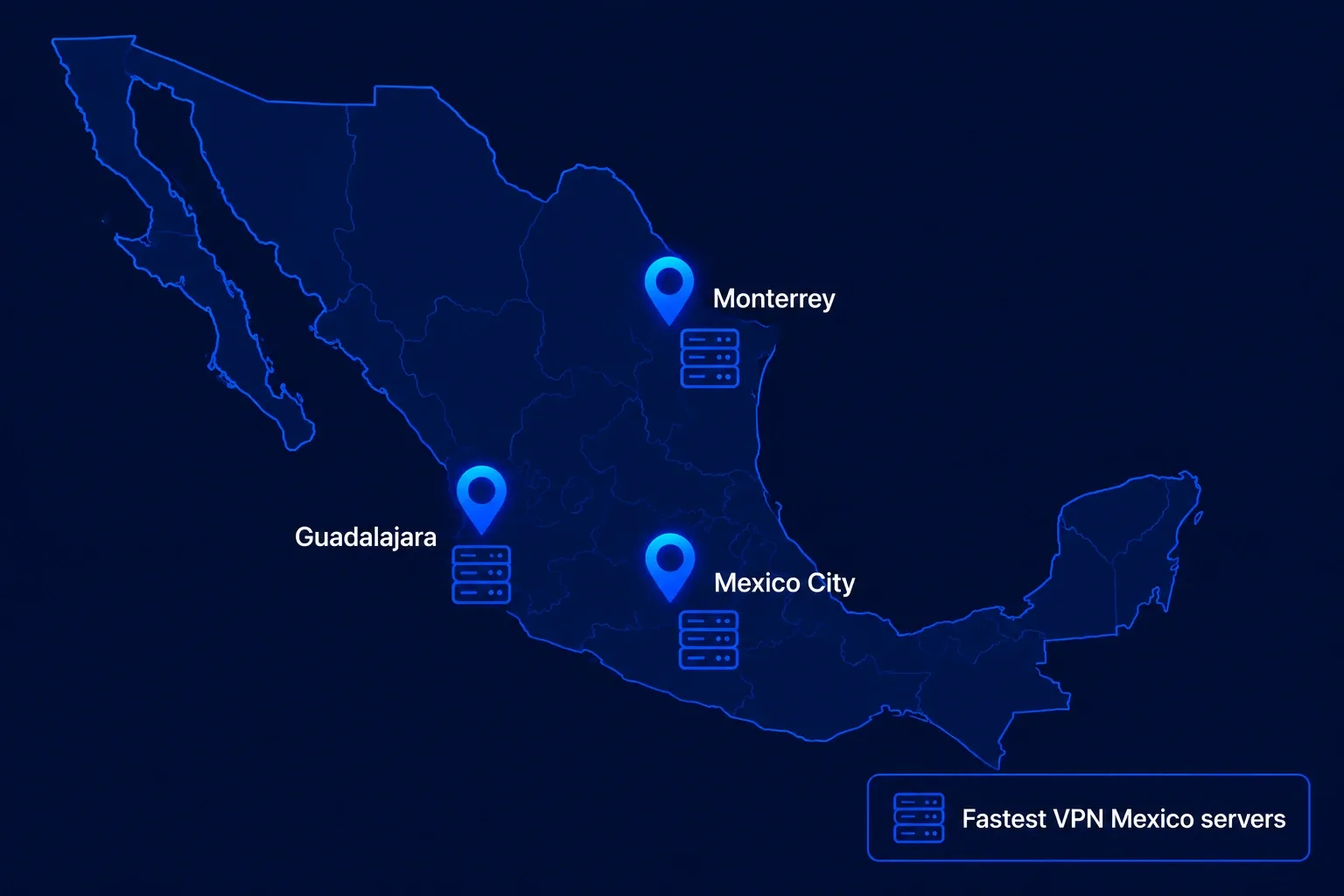
- Surfshark: advertises Mexico availability and unlimited simultaneous connections. Its current Mexico page lists servers in Querétaro, so do not repeat a Mexico City claim without checking the live server list.
NordVPN for Mexico: detailed review
NordVPN is a reasonable document-based pick if you want a mainstream app with Mexico availability. The provider publishes server and trust information, while server inventory, routing, pricing, and streaming access can change.
NordVPN's current Mexico and trust pages are the right places to check availability and privacy claims. This article has no VPNVertex latency dossier, so it does not promise a particular ping or call quality.
NordLynx is NordVPN's WireGuard-based protocol. Streaming services change their licensing and detection rules, and restrictive networks change their filtering, so the provider's feature documentation is not a guarantee. This article does not claim a VPNVertex speed, hotel-network, or unblocking test.
NordVPN publishes no-logs material and independent assessments from firms including PwC and Deloitte. That documentation supports a privacy comparison, not a hands-on result. See our full NordVPN review for the deeper teardown.
NordVPN is the document-based default in this comparison when you want a mainstream app and published privacy material.
Surfshark for Mexico: detailed review
Surfshark's official Mexico and support pages document Mexico availability, WireGuard support, and unlimited simultaneous connections. Pricing varies by plan, currency, tax, promotion, and renewal; check the current official pricing page. The current Mexico page should be checked for the exact city shown in the app.
For a household with two adults, three phones, two laptops, a smart TV, and a Fire TV Stick, device limits can matter. Surfshark's support documentation describes unlimited simultaneous connections; check the current plan terms and device support before relying on it for a household or router.
Streaming access and throughput vary by server, account, route, and platform policy. This article does not report a VPNVertex Surfshark unblocking or speed test, and it does not guarantee 4K performance.
The full Surfshark review has the full breakdown. Compare the current device terms and pricing directly before subscribing.
Is a VPN in Mexico legal? (reviewed September 12, 2026)
Legal review: September 12, 2026. I reviewed the current Mexico telecom law published by the Diario Oficial de la Federación and Cámara de Diputados, plus IFT user-privacy guidance. Those materials regulate telecom networks, user rights, and privacy; I did not identify a general consumer-VPN ban or licensing rule in the materials reviewed. This is a limited source review, not legal advice.
Two caveats. First, Mexico has been the subject of human rights reporting on state surveillance of journalists and activists (notably Pegasus findings). Human Rights Watch documents these concerns on the HRW Mexico page. Using a VPN does not, by itself, make anyone a target; that said, if you are a reporter or civil society worker, threat-model with someone who does this professionally.
Second, using a VPN to access a paid service may conflict with that provider's terms. Do not use a VPN to bypass a bank's fraud controls or an employer's security policy. Check current laws and service terms before making a decision that carries real risk.
Watch Mexican Netflix, Televisa, and TV Azteca from abroad
The reverse angle matters too: people abroad may want Mexican content, but catalogues and regional access are controlled by each platform. Netflix, ViX, and other services can change licensing and VPN detection without notice.
The provider pages list Mexico availability, but the exact city and access result can change. This article has no VPNVertex streaming test; check the live server list, the platform terms, and the provider's current documentation before subscribing.
If your primary use case is region-hopping catalogues in general, see our broader best VPN for streaming guide.
Best VPN Mexico for US expats living there
US expats in Mexico have a mix of privacy, media, work, and official-service needs. A VPN can protect traffic on untrusted WiFi, but it is not a shortcut around authentication or fraud controls.
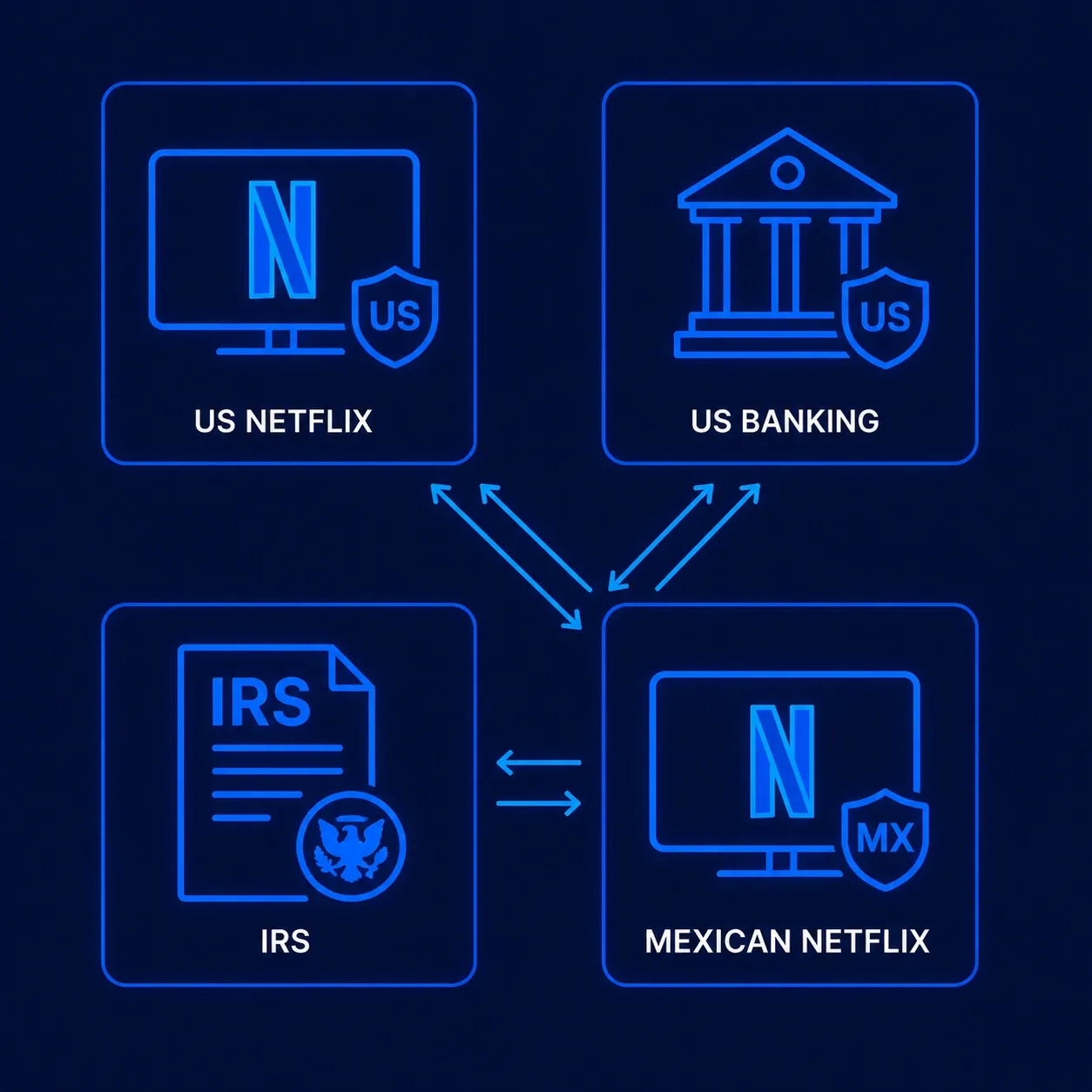
- US streaming: catalogues and availability vary by platform, account, location, and current terms. A VPN may help with permitted media access, but no result is guaranteed.
- US banking: banks may use location and risk controls. Use the official bank app or website and follow its travel, identity-verification, and support procedure; do not use a VPN to bypass a fraud alert.
- IRS and federal services: use the IRS International Taxpayers pages, IRS Online Account, and official international contact instructions. For voting and Social Security, use FVAP.gov and SSA International Operations.
- Work SaaS: follow your employer's SSO, travel, and security policy. A VPN is not a substitute for corporate approval or an access exception.
For the US-expat use case, compare provider documentation, current plan terms, and the official procedure for each service. Our best VPN for expats guide goes deeper on the banking angle.
How to set up a VPN in Mexico (5 steps)
Setup time depends on the operating system, app, and provider documentation. The steps below assume you picked one of the two providers above; the interface differs slightly between devices.
- Check the plan on the provider's official site, including currency, tax, renewal, and refund terms.
- Install the app on every device you use daily: phone, laptop, tablet, streaming stick.
- Sign in once per device with the account credentials, then configure the kill switch if the operating system, app, and provider documentation support it. Its behaviour varies by platform and app version.
- Pick a server for a permitted use such as local content, streaming covered by the service terms, or a stable connection. For banks, tax portals, and public services, follow the institution's official procedure rather than trying to appear local.
- Verify: confirm the app's connection and DNS settings, then test only a service you are entitled to use. Do not use an IP check to bypass a security control.
If a video service blocks a VPN, check its terms or contact support. A protocol or server change is not a guarantee and should not be used to defeat account security, banking controls, or an employer policy.
Travelers often face similar setup questions in different countries. The Turkey VPN guide covers a stricter legal and network environment, while Hulu while traveling explains what a US subscription covers away from home.
Our verdict
The two providers covered here address different documented needs: NordVPN publishes Mexico and privacy material, while Surfshark advertises Mexico availability and unlimited connections.
This comparison contains no VPNVertex hands-on test, so it does not claim a fastest provider, universal streaming access, or a blanket no-logs conclusion. Pick NordVPN if its published server and privacy documentation fit your needs. Pick Surfshark if unlimited connections are the deciding feature. Check current prices and terms before subscribing.
A Mexico VPN should be selected for audited privacy controls, nearby server capacity, and the services a traveler or resident actually uses. No Mexico VPN can guarantee access to every platform because IP detection and licensing rules change independently of the VPN app.
Frequently asked questions about VPN Mexico
Sources
- Diario Oficial de la Federación: current Mexico telecom law
- Cámara de Diputados: Ley en Materia de Telecomunicaciones y Radiodifusión
- IFT: privacy information for users of digital services
- NordVPN: Mexico server information
- NordVPN: trust center and privacy material
- Surfshark: Mexico servers
- Surfshark: current pricing and renewal terms
- CISA: cybersecurity while traveling
- Human Rights Watch: Mexico