Comparison
ExpressVPN vs Proton VPN 2026: speed vs privacy
The ExpressVPN vs Proton VPN choice is a clean split between two philosophies. ExpressVPN sells speed, streaming, and a polished experience. Proton VPN sells transparency, Swiss privacy law, open-source code, and a free tier almost no rival matches. Both hold recent independent audits, so the decision is less about who is trustworthy and more about which strengths fit you. This comparison breaks down where each one wins, drawn from audits and provider documentation rather than a sponsored trial.
Quick verdict
ExpressVPN is the better pick for speed, streaming, and ease of use, with its Lightway protocol and a long record of unblocking the major libraries. Proton VPN is the better pick for privacy and value, with Swiss jurisdiction, fully open-source apps, Secure Core multi-hop routing, and a genuinely usable free tier. If you mostly stream and want the smoothest experience, ExpressVPN leads. If privacy, transparency, and a free option matter most, Proton VPN wins. Both are audited no-logs providers, so neither is a wrong answer on trust.
ExpressVPN vs Proton VPN at a glance
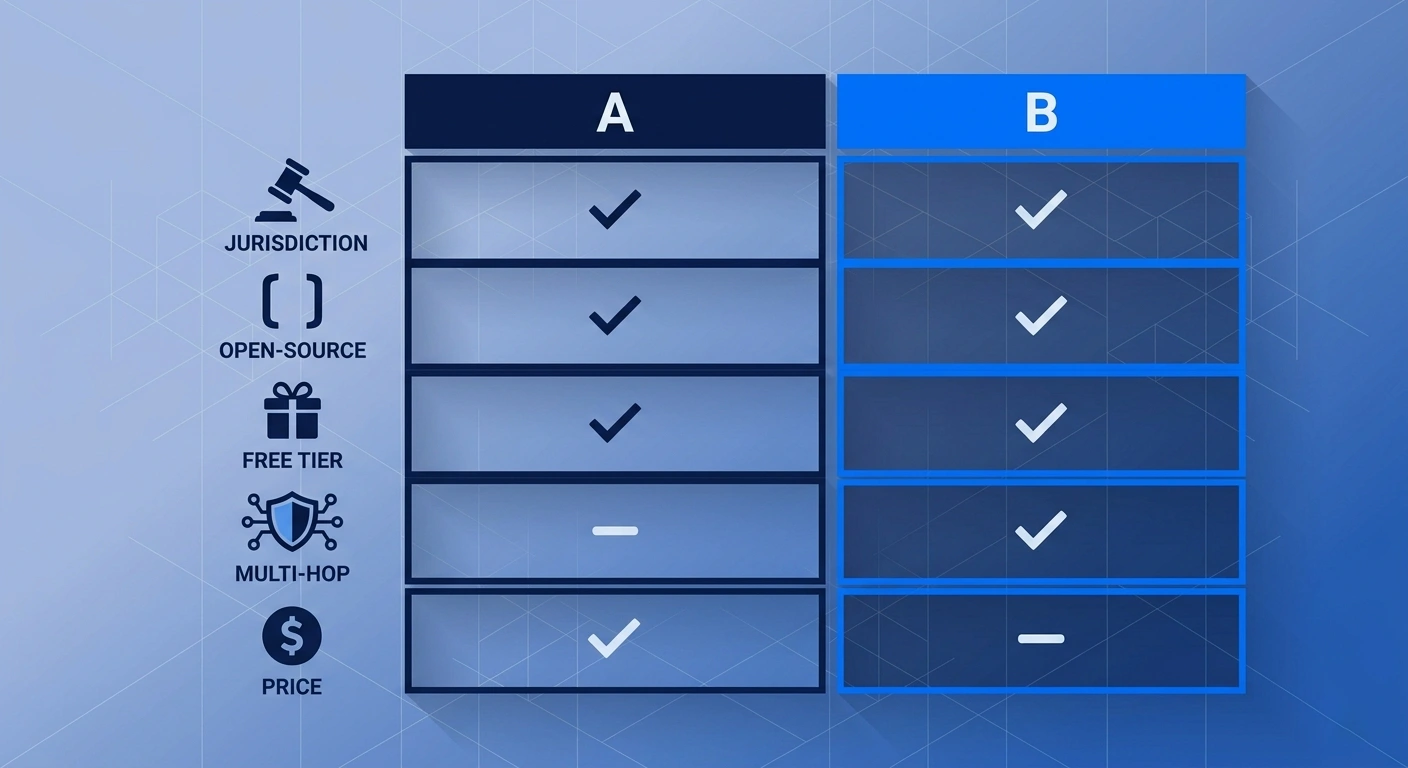
| Feature | ExpressVPN | Proton VPN |
|---|---|---|
| Jurisdiction | British Virgin Islands | Switzerland |
| Independent audits | KPMG and Cure53 | Securitum, annually |
| Open-source apps | No | Yes |
| Free tier | No | Yes, no data cap |
| Fastest protocol | Lightway | WireGuard |
| Multi-hop | No | Secure Core |
| Port forwarding | No | Yes |
| Simultaneous devices | 8 | 10 |
| Best for | Speed and streaming | Privacy and value |
| Approx price (long plan) | Around $6.67 / mo | Around $4 to $5 / mo |
Jurisdiction and privacy
Both providers sit outside the main surveillance alliances, but they make different privacy cases. ExpressVPN is based in the British Virgin Islands, a jurisdiction with no data-retention laws, and runs its TrustedServer system where every server operates from RAM and wipes on reboot. KPMG has audited its no-logs claim and Cure53 has reviewed its apps and the Lightway protocol.
Proton VPN goes further on transparency. It is based in Switzerland, which has some of the strongest privacy laws anywhere, its apps are fully open-source so the code can be inspected rather than trusted, and it comes from the team behind Proton Mail with a privacy-first reputation to protect. Securitum audits it annually. If your priority is provable, inspectable privacy, Proton VPN has the edge. If a no-logs RAM-only system from a no-retention jurisdiction is enough for you, ExpressVPN is solid. For how the audit firms differ, see our guide to VPN independent audits.
Speed

Both are fast, but ExpressVPN has built its brand on it. Lightway is a lightweight protocol designed for quick connections and stable speeds, and ExpressVPN holds throughput well across distances. Proton VPN runs WireGuard and is quick on nearby servers, though its Secure Core routing trades some speed for the extra privacy hop when you use it. For everyday browsing and streaming both feel fast. If you want the smallest speed penalty on distant servers and the snappiest reconnects, ExpressVPN has a slight edge. The fuller speed picture for each is in our ExpressVPN review.
Streaming
ExpressVPN is the stronger streamer. It has a long record of unblocking Netflix libraries, Disney Plus, BBC iPlayer, and more, and its MediaStreamer smart-DNS puts a stream on devices that cannot run a VPN app, such as some smart TVs and consoles. Proton VPN unblocks major services too, particularly on its Plus plan, but ExpressVPN is the more consistent choice if streaming across many platforms and devices is your main use. If that is the priority, weigh both against our wider best VPN for streaming ranking.
Security features
Both cover the essentials and then diverge on extras. ExpressVPN keeps things clean and simple: a reliable kill switch, TrustedServer RAM-only infrastructure, Threat Manager to block trackers, and an interface built for people who do not want to think about settings. Proton VPN leans toward the privacy power user. It adds Secure Core multi-hop routing through privacy-friendly countries, NetShield to block ads and trackers, port forwarding for torrenting, and a Stealth protocol to disguise VPN traffic on restrictive networks. If you want simplicity, ExpressVPN delivers it. If you want more privacy tooling to configure, Proton VPN gives you more to work with.

Pricing and the free tier
This is one of Proton VPN's clearest advantages. It runs a genuinely usable free tier with no data cap, which is rare and a real reason to try it at no cost, and its paid plans land at around 4 to 5 dollars a month on a long commitment. ExpressVPN has no free tier and sits at the premium end, around 6.67 dollars a month on the annual plan, which buys the speed and streaming polish but costs more. Both offer a 30-day money-back guarantee. If budget or a free option matters, Proton VPN wins this category outright. If you are paying either way and value the experience, the gap is smaller.
Which should you pick
The ExpressVPN vs Proton VPN decision comes down to what you weight most.
Choose ExpressVPN if
- Streaming across many platforms and devices is your main use.
- You want the fastest, simplest experience with the least setup.
- You need MediaStreamer for a smart TV or console.
Choose Proton VPN if
- Provable, open-source privacy and Swiss jurisdiction matter most.
- You want a free tier or a lower paid price.
- You want Secure Core multi-hop, port forwarding, or a stealth mode.
If neither feels right, our NordVPN vs Proton VPN comparison brings a third option into the mix.
FAQ
Final word
ExpressVPN and Proton VPN are both genuinely good, and the right answer is the one whose strengths match your use. ExpressVPN is the faster, simpler, better streamer, and the pick if you want a VPN that just works across your devices with the least fuss. Proton VPN is the privacy and value champion, with Swiss jurisdiction, open-source code, Secure Core, and a free tier that lets you try it for nothing. Decide whether speed and streaming or privacy and value sit higher on your list, and the winner is clear. For another angle, our Proton VPN review covers it in full.