Review
Private Internet Access review 2026: torrenting and value
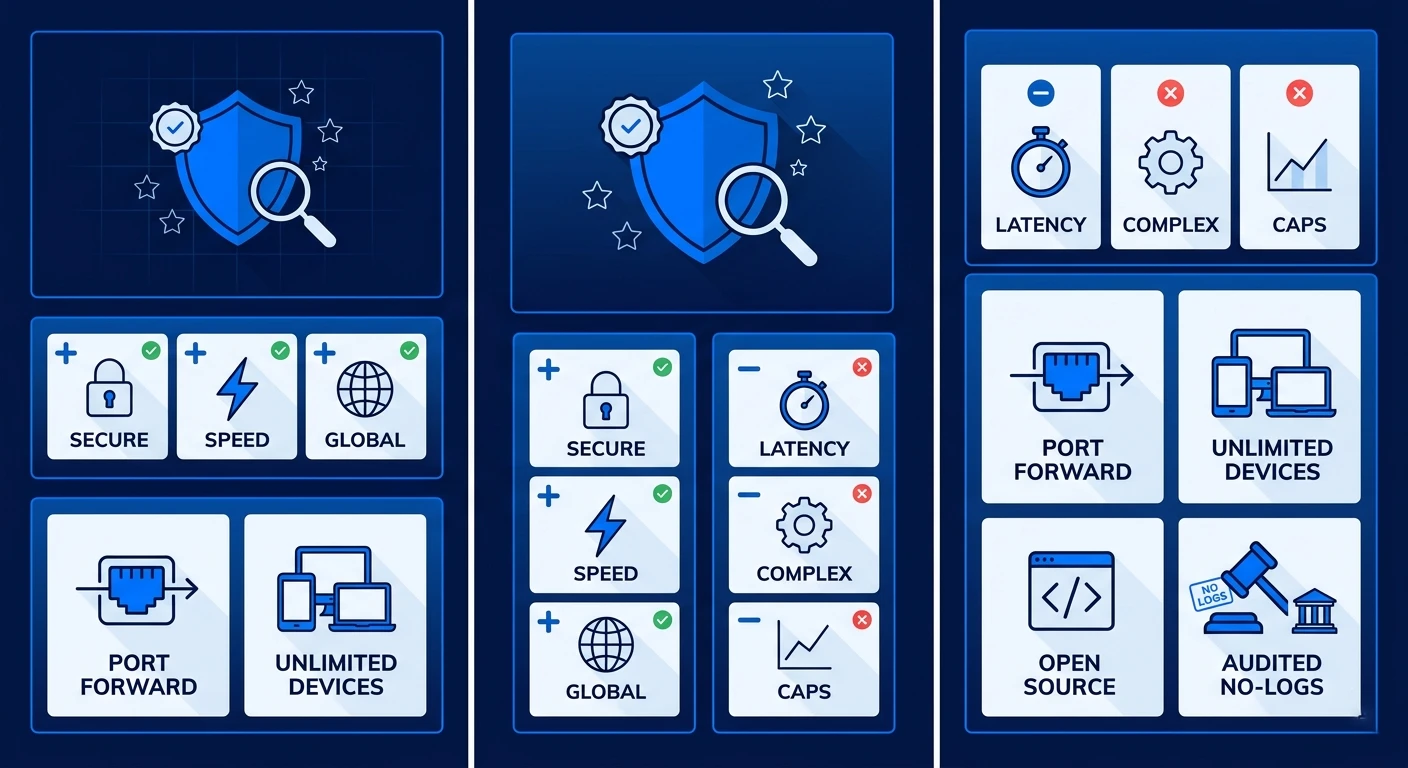
This Private Internet Access review looks at the one VPN whose no-logs policy has been tested where it counts: in court. PIA pairs that record with port forwarding, unlimited devices, open-source apps, and a price that undercuts almost every rival. The trade-offs are a United States base and streaming that is less consistent than the top tier. Here is the full assessment, drawn from independent audits, the public court record, and aggregated user reports rather than a sponsored trial.
Quick verdict
Private Internet Access is built for people who care about provable privacy on a budget. It does not chase the marketing crown for speed or streaming, and it does not need to. What it offers is open-source software anyone can inspect, a no-logs claim that survived legal pressure, and features torrenters specifically ask for, all at a price near the bottom of the market.
How we put together this Private Internet Access review
This review draws on PIA's published documentation, its Deloitte no-logs audit, the public record from US court cases where the company was asked for user data, and user reports aggregated from Trustpilot and the privacy communities on Reddit. Pricing was checked against the provider site. No claim here rests on a personal speed run or a staged unblocking test. Where a number is approximate, it is labeled as such. See our broader note on how the audit firms compare in the VPN independent audits guide.
Pros and cons
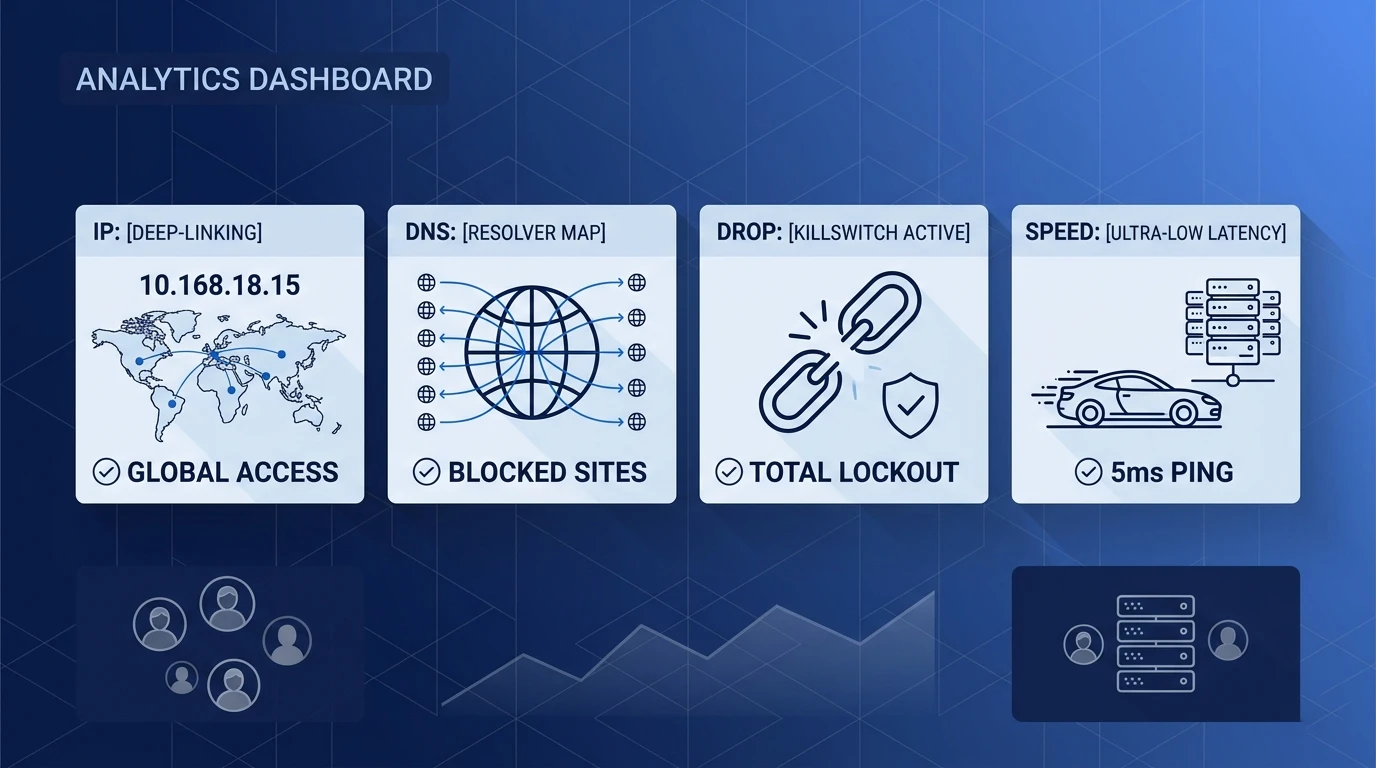
- No-logs policy tested in US court and backed by a Deloitte audit
- Port forwarding for better torrent seeding
- Unlimited simultaneous devices on one plan
- Fully open-source apps anyone can inspect
- Very large server network with deep US coverage
- Among the lowest long-term prices in the market
- Based in the United States, inside the Five Eyes
- Streaming is less consistent than the top tier
- No RAM-only server fleet
- The granular app can feel busy for first-time users
No-logs record and independent audits
This is PIA's strongest card. Most providers ask you to trust a no-logs promise. PIA has been asked for user data in US court proceedings and had nothing to hand over, because it does not keep connection logs. That is proof under legal compulsion, which carries more weight than any scheduled review. On top of the court record, PIA commissioned a Deloitte audit of its no-logs claim, so there is an independent firm backing the policy as well. The honest caveat is jurisdiction. PIA is based in the United States, a Five Eyes member, which makes some buyers nervous on principle. The counterpoint is that the court record shows the jurisdiction has been tested and there was simply no data to compel.
Torrenting and port forwarding
PIA is one of the most recommended VPNs for torrenting, and the features explain why. Port forwarding lets your client accept incoming connections, which improves seeding and peer counts. Peer-to-peer traffic is allowed across the whole network rather than confined to a few servers. Unlimited devices means a seedbox-style machine and your everyday devices share one subscription. The MACE feature blocks ads and trackers at the DNS level while you download. If torrenting is your main use, PIA covers it more completely than most premium names. For the wider field, see our best VPN for torrenting guide.
Speed
PIA runs WireGuard alongside OpenVPN, and on a nearby server it is quick enough for streaming, calls, and large downloads. It does not top the public speed charts the way NordVPN does on distant servers and under heavy load, but the gap is modest on a local connection. For most day-to-day use you will not notice it. If raw speed across long distances is your priority, the head-to-head in our PIA vs NordVPN comparison lays out where each one pulls ahead.
Servers and streaming
PIA advertises one of the largest server networks in the industry, with coverage in every US state, which helps with regional services that check your location and makes it easy to find a lightly loaded server. Streaming is the softer spot. PIA can unblock some libraries, but it is less consistent than the providers built around media and slower to rotate addresses that streaming platforms flag. If streaming is a priority alongside privacy, weigh it against our best VPN for streaming picks before deciding.
Privacy and security features
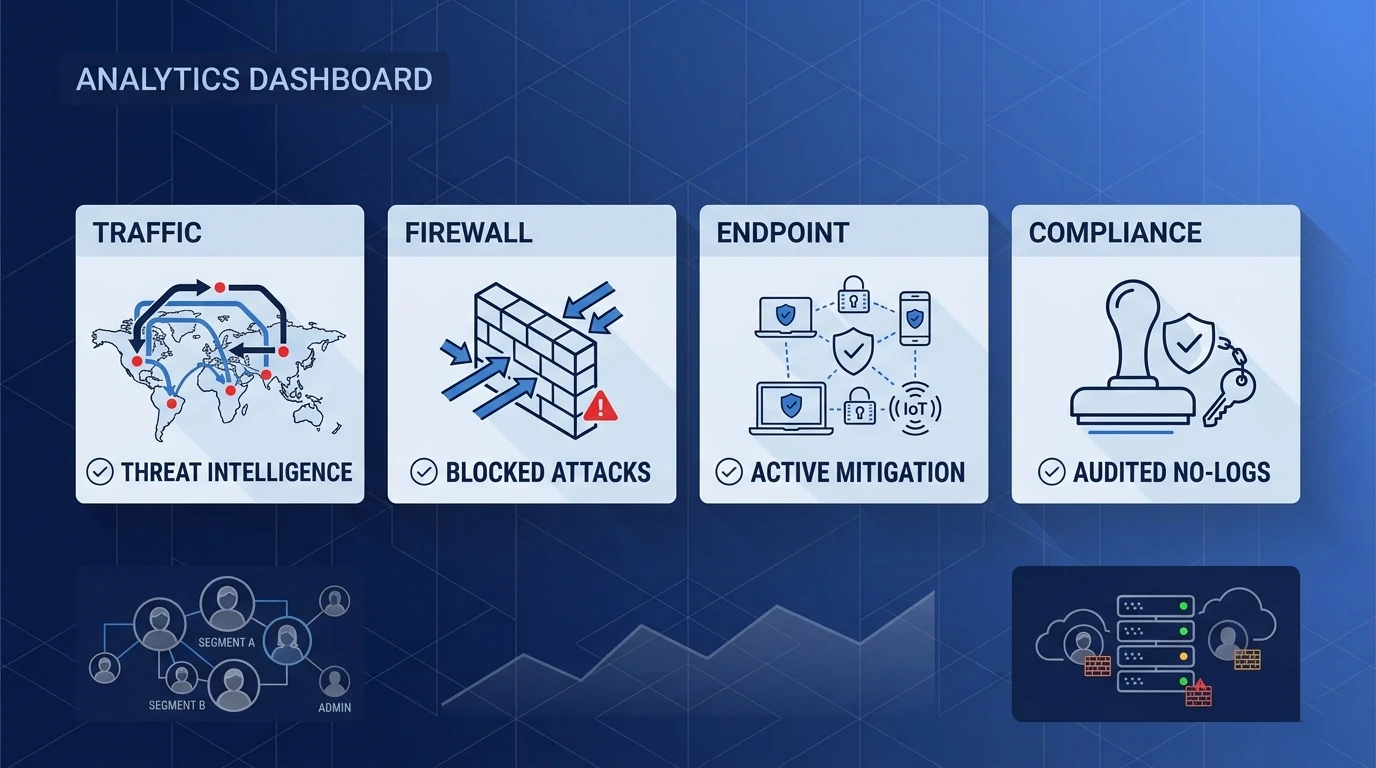
PIA's privacy story leans on transparency. Its apps are fully open-source, so the code can be inspected rather than taken on trust, which is rare and genuinely useful. The reliable kill switch blocks traffic if the tunnel drops, MACE filters ads and trackers, and you get granular controls over the encryption settings and connection port. The one thing it lacks against the top tier is a RAM-only server fleet, the diskless design some rivals use so a reboot wipes the machine. For most threat models the open-source code and court record outweigh that gap, but it is worth noting for buyers who rank infrastructure design highly.

Pricing
Price is one of PIA's biggest draws. On its multi-year plan it lands at around 2 dollars a month, near the bottom of the market, and the unlimited-device allowance makes it even better value for a household or a small team. There is a 30-day money-back guarantee, so you can run the leak tests and try torrenting before committing. Short monthly plans cost much more per month, as with every provider, so the long commitment is where the value sits.
What users report
Aggregated reports on Trustpilot and the privacy communities on Reddit match the assessment above. Users consistently praise the value, the torrenting performance, and the transparency of open-source apps backed by the court record. The most common reservation is the United States base, raised more as a principle than a documented failure. A minority report occasional connection drops that a server switch resolves. The pattern that sinks weaker providers, unresolved no-logs doubts or frequent outages, does not show up here.
Who PIA is for, and who it is not
PIA is the right pick if you torrent and want port forwarding, you want the lowest long-term price, you run many devices, or you value open-source apps and a court-tested no-logs record over jurisdiction on paper. Look elsewhere if streaming is your main reason for a VPN, if you want the fastest possible speeds on long-distance servers, or if a non-Five-Eyes base is a hard requirement for you. In those cases a provider like NordVPN fits better, which is covered in the alternatives below.
Alternatives to consider
If PIA is not the right fit, two names cover its weak spots. NordVPN is faster on distant servers, based in Panama outside the Five Eyes, and stronger for streaming, with RAM-only servers and a longer audit history. The full breakdown is in our NordVPN review. Surfshark is the other budget-friendly option with unlimited devices and reliable streaming, if you want a cheaper all-rounder that handles media better than PIA does.
FAQ
Final verdict
Private Internet Access knows exactly what it is. It will not win a streaming shootout or a long-distance speed race, and it does not pretend to. What it delivers is provable privacy, the features torrenters need, unlimited devices, and a price almost no premium rival matches, all on open-source code with a no-logs record tested in court. For privacy-minded users and torrenters on a budget, that is a strong package. If streaming or a non-Five-Eyes base matters more to you, the alternatives above will serve you better.